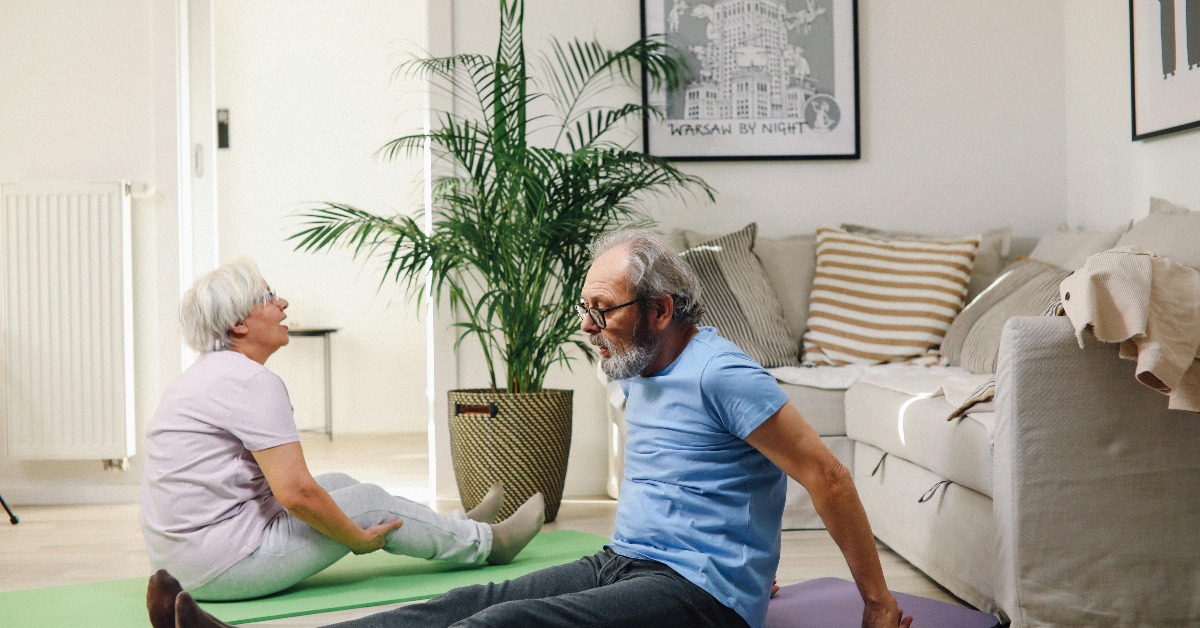
Practicing couple yoga poses is a fun and rewarding way to improve flexibility, strength, balance, and communication with your partner. Whether you’re practicing with your spouse, friend, or family member, partner yoga encourages teamwork while making exercise more enjoyable.
Partner yoga positions, in contrast to solo yoga, call for mutual support, trust, and synchronization. Many introductory couple yoga postures are easy, safe, and appropriate for all fitness levels, so you don’t need any prior yoga expertise to get started. As one partner folds forward, the other gradually leans back. With your knees bent, take a seat facing your spouse. Hold for 20 to 30 seconds while keeping your core active. As though you were sitting in a chair, slowly bring your knees together. In this guide, you’ll discover the best yoga poses for couples, learn how to perform them safely, explore their benefits, and follow a beginner-friendly routine you can practice at home.
What Are Couple Yoga Poses?
Couple yoga poses, also called partner yoga poses, are yoga postures performed by two people working together. Instead of practicing alone, both partners assist each other with balance, stretching, and stability.
Partner yoga focuses on:
- Communication
- Trust
- Balance
- Flexibility
- Strength
- Mindfulness
- Relaxation
These poses can be gentle enough for beginners or more challenging for experienced practitioners.
Benefits of Couple Yoga
Practicing yoga poses for couples offers physical, mental, and emotional benefits.
| Benefit | How It Helps |
| Improves flexibility | Partners help deepen stretches safely |
| Builds strength | Supports muscles through shared movements |
| Enhances balance | Improves stability and coordination |
| Strengthens relationships | Encourages trust and teamwork |
| Reduces stress | Promotes relaxation together |
| Improves communication | Requires clear verbal and non-verbal cues |
Regular couples yoga exercises can also create quality time together while supporting a healthier lifestyle.
Who Can Practice Couple Yoga?
Almost anyone can enjoy partner yoga for beginners, including:
- Couples
- Friends
- Parents and children
- Siblings
- Workout partners
You don’t need advanced flexibility or athletic ability. Start with easy poses and gradually progress as your confidence grows.
How to Prepare for Partner Yoga
Before starting your couple yoga routine, make sure you have:
| Item | Purpose |
| Yoga mats | Prevent slipping |
| Comfortable clothing | Allows easy movement |
| Open space | Ensures safe practice |
| Water bottle | Stay hydrated |
Safety Tips Before You Begin
- Communicate with your partner throughout each pose.
- Warm up before stretching.
- Never force a movement.
- Support each other gently.
- Stop if either partner feels pain.
Best Couple Yoga Poses for Beginners
These easy couple yoga poses are ideal for beginners and help build trust, balance, and flexibility.
1. Seated Back-to-Back Twist
How to Do It
- Sit back-to-back with your partner.
- Cross your legs comfortably.
- Inhale to lengthen your spine.
- Exhale and twist to your right.
- Place your left hand on your right knee and your right hand on your partner’s knee.
- Hold for 20-30 seconds, then switch sides.
Benefits
- Improves spinal mobility
- Releases back tension
- Encourages synchronized breathing
- Enhances communication
2. Double Child’s Pose
How to Do It
- One partner begins in Child’s Pose.
- The second partner gently kneels behind and stretches forward over the first partner.
- Both partners breathe deeply.
- Hold for 30-60 seconds.
Benefits
- Relaxes the body
- Opens the shoulders
- Gently stretches the back
- Promotes relaxation together
3. Partner Forward Fold
How to Do It
- Sit facing your partner.
- Extend your legs forward.
- Hold each other’s hands.
- As one partner folds forward, the other gradually leans back.
- Switch roles after 30 seconds.
Benefits
- Improves hamstring flexibility
- Stretches the lower back
- Builds trust
- Encourages teamwork
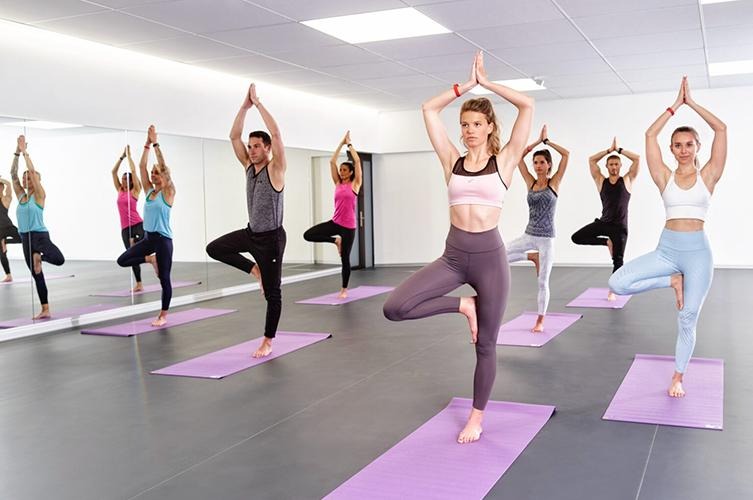
4. Partner Tree Pose
How to Do It
- Stand beside your partner.
- Put your inner arms around each other’s waists.
- Lift your outside foot onto your calf or inner thigh.
- Bring your free hands together overhead if comfortable.
- Hold for 20–30 seconds.
Benefits
- Improves balance
- Strengthens the legs
- Builds coordination
- Increases concentration
5. Twin Downward-Facing Dog
How to Do It
- Both partners begin in Downward-Facing Dog.
- Position yourselves side by side.
- Keep your spine long and heels reaching toward the floor.
- Breathe deeply for 30 seconds.
Benefits
- Stretches the entire body
- Strengthens shoulders and arms
- Improves posture
- Builds endurance
Why Partner Yoga Is Great for Relationships
Practicing yoga with a partner is about more than physical exercise. It helps strengthen emotional connections by encouraging patience, trust, and teamwork.
Partner yoga can:
- Improve communication
- Increase mutual support
- Build confidence
- Reduce daily stress
- Create meaningful quality time
- Strengthen emotional bonds
Whether you’re practicing with a spouse, close friend, or family member, these shared experiences can make yoga more enjoyable and motivating.
6. Partner Boat Pose
How to Do It
- With your knees bent, take a seat facing your spouse.
- Hold each other’s hands firmly.
- Place the soles of your feet against your partner’s feet.
- Slowly lift one leg at a time until both legs are straight.
- Hold for 20 to 30 seconds while keeping your core active.
Benefits
- Strengthens the core
- Improves balance
- Builds teamwork
- Increases body coordination
7. Double Warrior II
How to Do It
- Stand facing each other.
- Step one foot back into Warrior II.
- Extend your front arms and gently hold your partner’s hands.
- Keep both knees aligned and your chest open.
- Hold for 30 seconds before switching sides.
Benefits
- Strengthens the legs
- Opens the hips
- Improves stability
- Encourages synchronized movement
8. Partner Chair Pose
How to Do It
- Stand back-to-back with your partner.
- Interlock your arms or hold hands.
- As though you were sitting in a chair, slowly bring your knees together.
- Hold the position for 20-30 seconds.
- Return to standing together.
Benefits
- Builds leg strength
- Engages the core
- Improves balance
- Develops trust and coordination
9. Standing Side Stretch
How to Do It
- Stand side by side.
- Hold your inside hands together.
- Raise your arms overhead.
- Gently lean away from each other.
- Hold for 20-30 seconds, then switch sides.
Benefits
- Stretches the sides of the body
- Improves flexibility
- Opens the shoulders
- Enhances posture
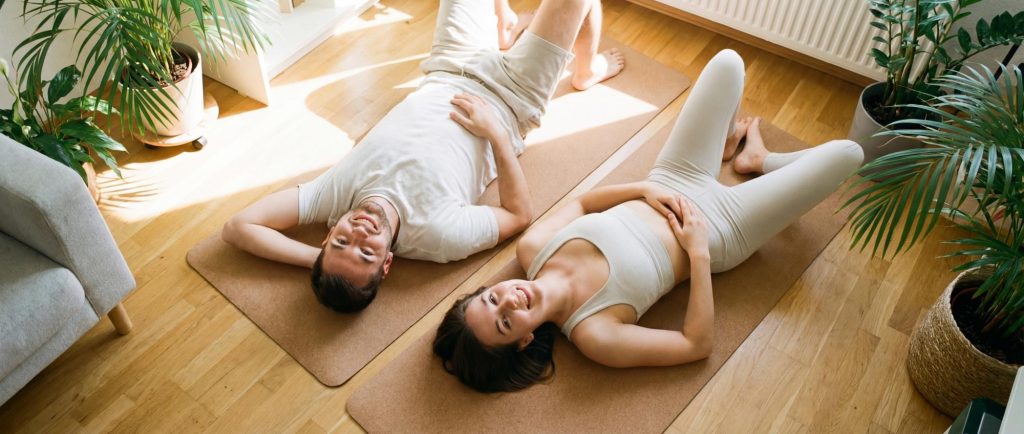
10. Partner Savasana
How to Do It
- Lie on your backs beside each other.
- Allow your arms to gently touch or hold hands if comfortable.
- Close your eyes.
- Focus on slow, deep breathing.
- Relax for 5–10 minutes.
Benefits
- Reduces stress
- Encourages mindfulness
- Promotes deep relaxation
- Strengthens emotional connection
Beginner Couple Yoga Routine (15-20 Minutes)
This simple couple yoga routine is perfect for beginners.
| Pose | Time |
| Seated Back-to-Back Twist | 2 minutes |
| Double Child’s Pose | 2 minutes |
| Partner Forward Fold | 2 minutes |
| Partner Tree Pose | 2 minutes |
| Twin Downward Dog | 2 minutes |
| Partner Boat Pose | 2 minutes |
| Double Warrior II | 2 minutes |
| Partner Chair Pose | 2 minutes |
| Standing Side Stretch | 2 minutes |
| Partner Savasana | 5 minutes |
Practice this routine 3-4 times a week to improve flexibility, balance, and connection with your partner.
Partner Yoga Stretches
If your goal is to improve flexibility, include these partner yoga stretches in every session:
- Seated Back-to-Back Twist
- Partner Forward Fold
- Standing Side Stretch
- Double Child’s Pose
- Twin Downward-Facing Dog
These stretches help release muscle tension while increasing mobility.
Common Mistakes to Avoid
| Mistake | Better Approach |
| Rushing into difficult poses | Start with beginner-friendly poses |
| Not communicating | Talk throughout every movement |
| Pulling your partner too hard | Stretch gently and evenly |
| Holding your breath | Maintain slow, steady breathing |
| Ignoring discomfort | Stop immediately if pain occurs |
| Skipping warm-ups | Prepare muscles before every session |
Safety Tips for Couple Yoga
To make partner yoga enjoyable and safe:
- Warm up before starting.
- Practice on a non-slip yoga mat.
- Communicate clearly during every pose.
- Respect each other’s flexibility limits.
- Avoid jerky or sudden movements.
- Maintain steady breathing.
- End each session with relaxation.
These simple precautions reduce the risk of injury and help both partners enjoy a positive experience.
Conclusion
Practicing couple yoga poses is an enjoyable way to strengthen your body while deepening your connection with your partner. From simple stretches like the Seated Back-to-Back Twist to balancing poses such as Partner Tree Pose and Partner Boat Pose, these beginner-friendly exercises improve flexibility, balance, coordination, and trust.
Whether you’re looking for a fun fitness activity or a relaxing way to spend quality time together, partner yoga poses offer benefits for both your physical health and your relationship. Start slowly, communicate openly, and enjoy the journey together.
FAQs
1. Which couple yoga positions are ideal for novices?
Partner Forward Fold, Partner Tree Pose, Twin Downward-Facing Dog, Partner Boat Pose, Double Child’s Pose, and Seated Back-to-Back Twist are all great poses for beginners.
2. Is partner yoga suitable for beginners?
Yes. Most partner yoga poses can be modified for beginners and focus on gentle stretching, balance, and teamwork rather than advanced flexibility.
3. What advantages does couple yoga offer?
Couples’ yoga improves flexibility, strength, balance, communication, trust, and emotional connection while reducing stress and promoting relaxation.
4. Can we practice couple yoga at home?
Absolutely. With a yoga mat, comfortable clothing, and enough open space, you can safely practice many couple yoga poses at home.
5. How often should couples practice partner yoga?
Practicing 2-4 times per week for 15-30 minutes is ideal for improving flexibility, coordination, and overall well-being while strengthening your relationship.