Ever feel tight in your chest after sitting for hours, working at a desk, or spending too much time on your phone? A few simple chest stretches can help you open your chest, improve flexibility, and feel more relaxed.
Hey, I want to share something that happened to me recently about chest stretches.
I was chatting with a friend when I suddenly saw this term pop up, and honestly, I had no clue what it meant at first.
I kept wondering, “Am I missing something here?” It was a bit confusing, and I didn’t want to respond the wrong way.
So, I decided to look into chest stretches and figure out their meaning and purpose.
After understanding them, I realized how useful these simple stretches can be for easing chest tightness and supporting better movement and posture.
I handled it by learning the proper meaning and benefits, and now I feel ready whenever I see chest stretches mentioned in chats, fitness posts, or wellness content.
What Are Chest Stretches?
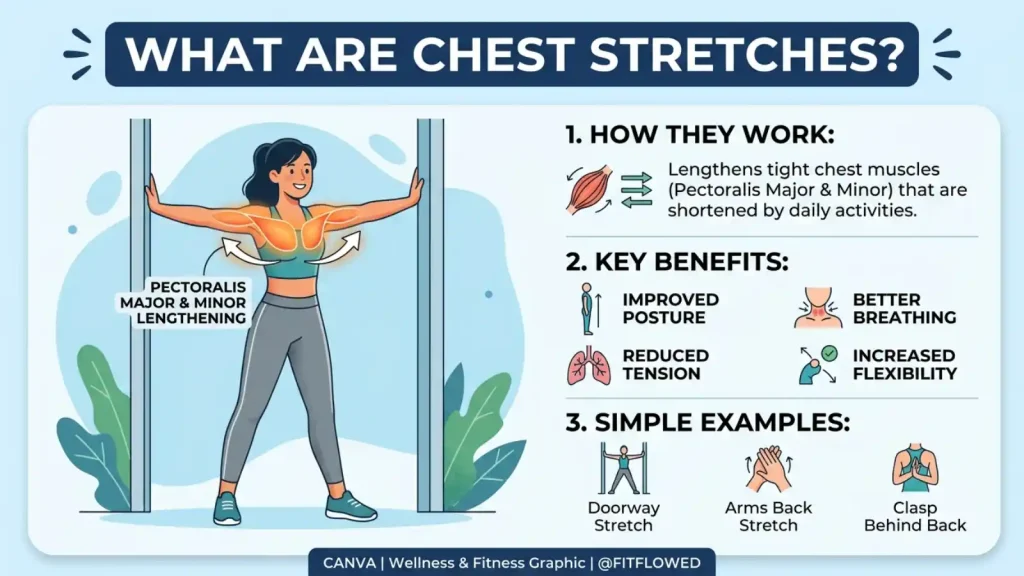
Chest stretches are gentle movements that lengthen and relax the muscles across the front of your chest. They often involve opening the arms, moving the shoulders back, or placing the hands in a position that creates a mild stretch across the chest.
The chest includes several muscles, with the pectoralis major being one of the main muscles. These muscles help with movements such as pushing and bringing your arms across your body.
When you spend a lot of time with your arms forward, such as while typing or using a phone, the front of your body may feel tight. Regular stretching may help support comfortable movement and better body awareness.
Chest stretches should feel gentle. You should feel mild tension, not sharp or intense pain.
Why Are Chest Stretches Important?
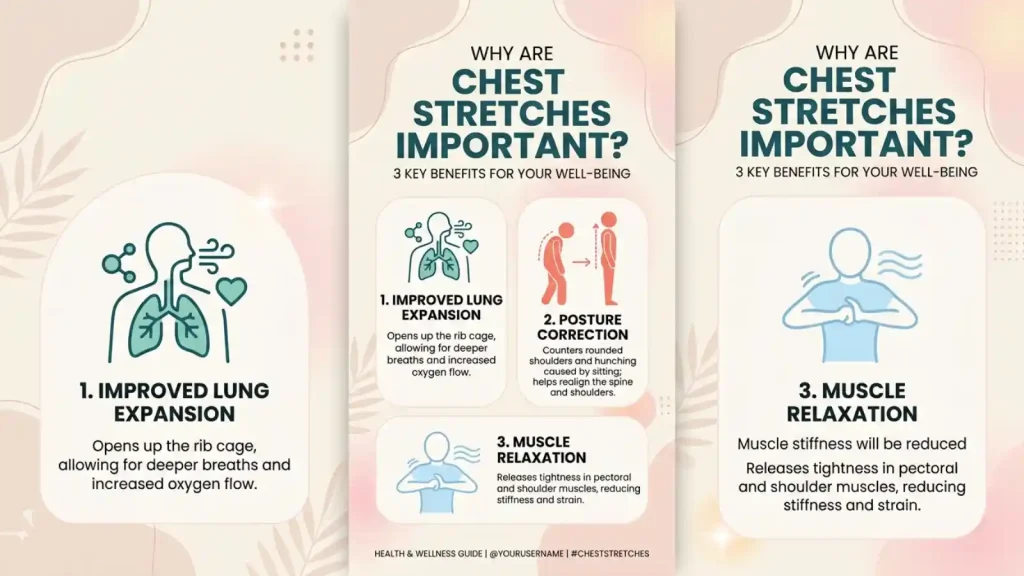
Chest flexibility plays a role in comfortable upper-body movement. Tight chest muscles may make it harder to move your shoulders through their normal range.
Gentle stretching may help support:
- Better upper-body mobility
- More comfortable shoulder movement
- Relaxation after long periods of sitting
- Improved awareness of posture
- Flexibility in the chest and shoulders
- A comfortable warm-up or cool-down routine
Stretching is not a quick fix for every cause of chest or shoulder discomfort. If pain continues, gets worse, or affects normal movement, it is better to speak with a qualified health professional.
7 Easy Chest Stretches for Beginners
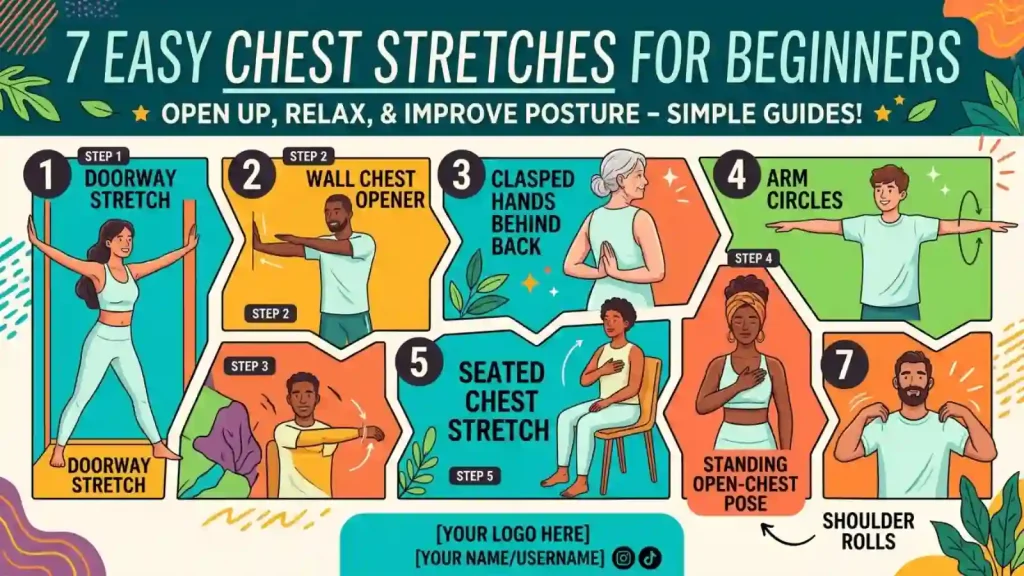
You can choose one or two stretches to start. There is no need to do all seven at once.
1. Doorway Chest Stretch
This is one of the easiest chest stretches to learn.
How to do it:
- Stand in an open doorway.
- Place your forearms on the door frame.
- Keep one foot slightly forward.
- Slowly move your body forward.
- Feel a gentle stretch across your chest.
- Hold for about 15–30 seconds.
- Return to the starting position.
Keep your back comfortable and avoid leaning too far forward.
2. Standing Chest Opener
This stretch needs no equipment.
How to do it:
- Stand tall with your feet about hip-width apart.
- Reach your arms behind your body.
- Hold your hands together if comfortable.
- Gently draw your shoulders back.
- Lift your hands slightly without forcing them.
- Hold for 15–30 seconds.
- Breathe slowly as you stretch.
Do not push your shoulders too far back.
3. Wall Chest Stretch
A wall can help you control the movement.
How to do it:
- Stand beside a wall.
- Place one hand and forearm against it.
- Keep your arm at a comfortable height.
- Slowly turn your chest away from the wall.
- Stop when you feel a gentle stretch.
- Hold for 15–30 seconds.
- Repeat on the other side.
This is useful when one side feels tighter than the other.
4. Hands-Behind-Back Stretch
This simple movement can open the front of your chest.
Stand tall and gently bring your hands behind your back. Hold your hands together or hold a towel if reaching your hands is difficult.
Slowly draw your shoulders back while keeping your neck relaxed. Hold the position for 15–30 seconds, then release.
Beginner tip: Do not worry about getting your hands high. A smaller range is fine.
5. Seated Chest Stretch
You can do this stretch at work or during a short break.
Sit near the front of a chair with your feet on the floor. Place your hands behind your head. Gently move your elbows back while keeping your neck relaxed.
Hold for 15–20 seconds. Breathe slowly and return to a relaxed position.
This can be a useful option if standing stretches are not convenient.
6. Arm-Across-Chest Stretch
This stretch mainly targets the shoulder, but it can also help create a gentle opening through the upper body.
Bring one arm across your chest. Use your other arm to gently guide it closer to your body. Keep your shoulders relaxed.
Hold for 15–30 seconds, then switch sides.
Avoid pulling hard on your arm.
7. Foam Roller Chest Opener
If you have a foam roller, you can use it for a gentle chest-opening exercise.
Place the roller lengthwise on the floor and carefully lie on it so your head and spine are supported. Bend your knees and keep your feet on the floor.
Let your arms rest out to the sides in a comfortable position. Stay there for about 30–60 seconds while breathing slowly.
Important: Keep the position comfortable. If you feel pain, numbness, or unusual symptoms, stop.
How Often Should You Do Chest Stretches?
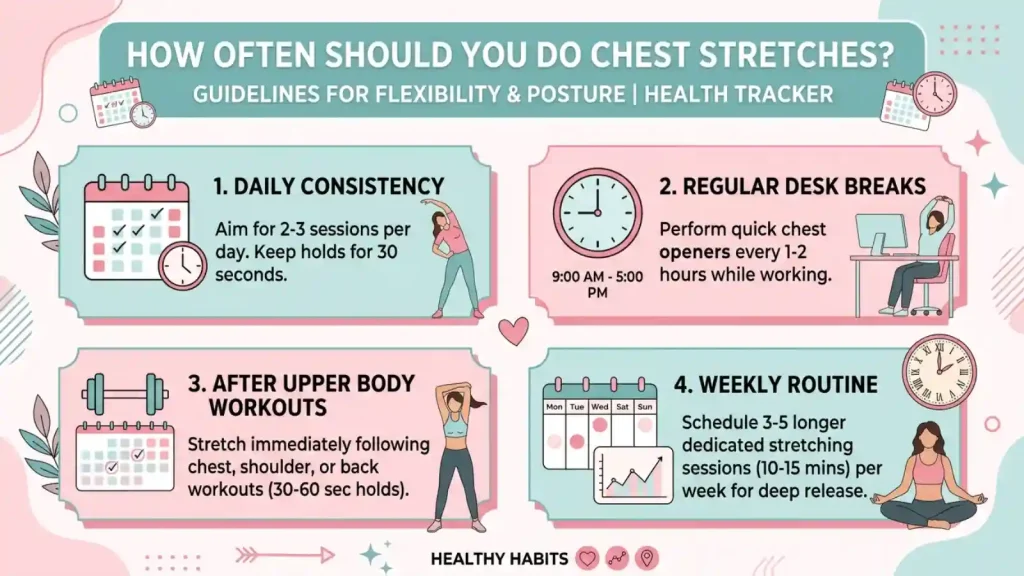
There is no need to stretch for a long time. A short routine done regularly may be easier to maintain.
For beginners, try 5–10 minutes of gentle stretching on most days. You can also use a few chest stretches after sitting for a long time.
A simple routine could look like this:
- Standing chest opener — 20 seconds
- Doorway chest stretch — 20 seconds
- Wall chest stretch — 20 seconds per side
- Arm-across-chest stretch — 20 seconds per side
- Slow breathing — 30 seconds
Repeat the routine once if it feels comfortable.
Common Mistakes to Avoid
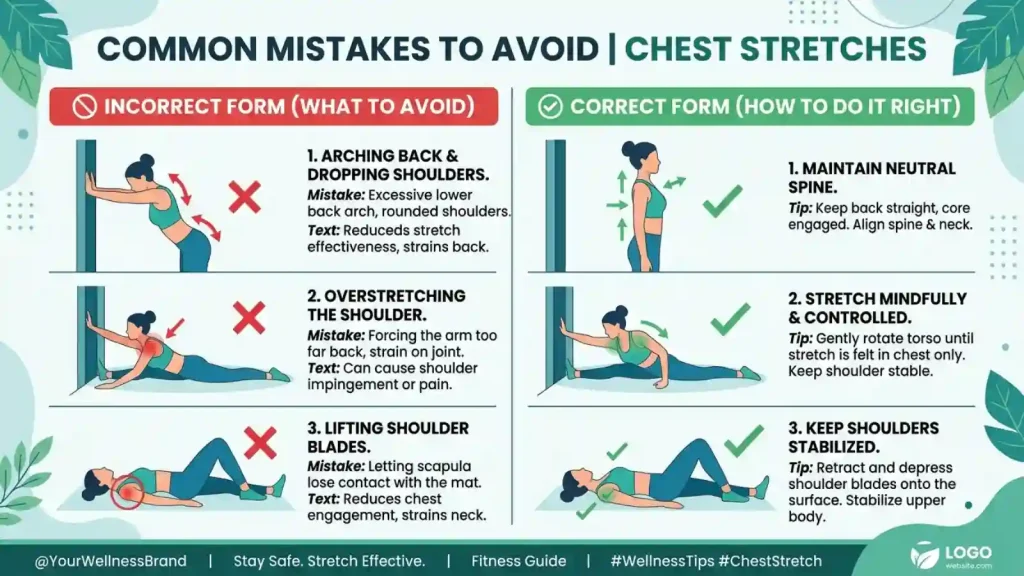
Chest stretching should be gentle and controlled. Avoid these common mistakes:
Stretching Too Hard
A stronger stretch is not always better. Forcing a movement can increase discomfort and may make you tense your muscles.
Holding Your Breath
Slow breathing can help you stay relaxed. Try to breathe normally throughout each stretch.
Shrugging Your Shoulders
Keep your shoulders relaxed instead of pulling them toward your ears.
Moving Too Fast
Do not bounce into a stretch. Move slowly into the position and slowly come back out.
Ignoring Pain
Mild stretching tension can be normal. Sharp pain, burning, numbness, or unusual discomfort is a reason to stop.
When Is the Best Time to Stretch Your Chest?
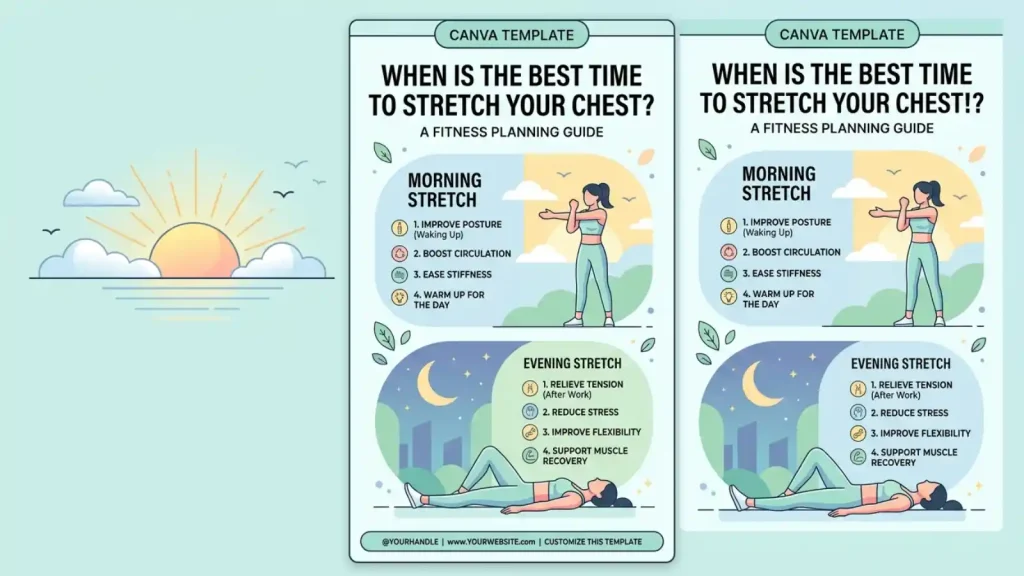
You can do chest stretches at several points during the day.
After sitting: A few gentle stretches may help you feel less stiff after working at a desk.
After exercise: Gentle stretching can be part of a cool-down routine.
During breaks: A short chest-opening routine can help break up long periods of sitting.
In the evening, gentle movements may help you relax after a busy day.
If you plan to stretch before intense exercise, begin with light movement first. Static stretches are often more comfortable after the body is warmed up.
Safety Tips for Chest Stretches
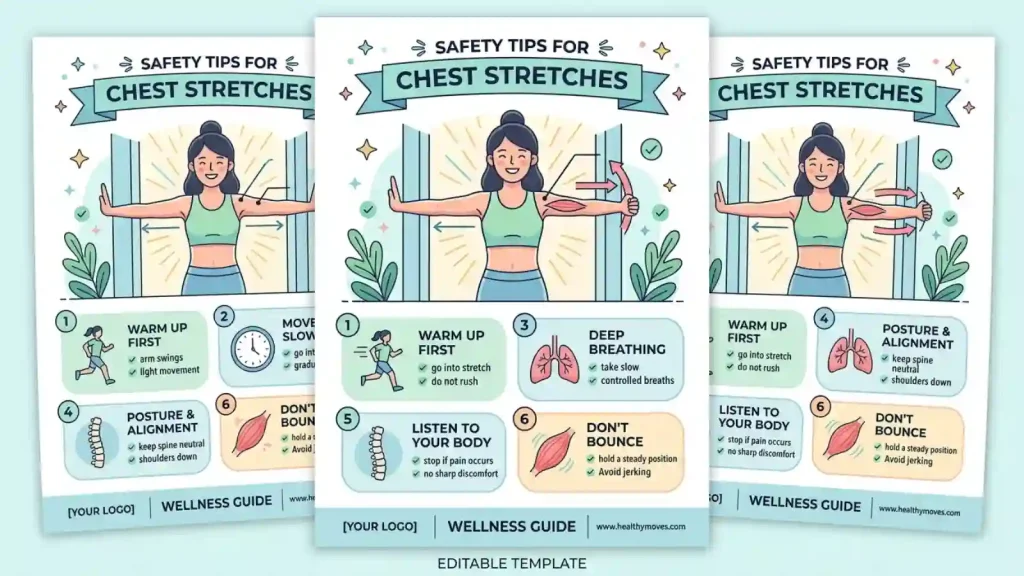
Most gentle stretches are easy to perform, but good technique matters.
- Start with a small range of motion.
- Keep each movement slow and controlled.
- Never force a stretch.
- Keep breathing normally.
- Stop if you feel sharp or unusual pain.
- Increase the stretch gradually over time.
- Use a stable wall, doorway, or chair when needed.
If you have a current injury, medical condition, recent surgery, or ongoing chest, shoulder, or arm pain, ask an appropriate health professional before starting a new stretching routine.
Also, do not assume chest pain is simply muscle tightness. New, severe, or unexplained chest pain should receive prompt medical attention.
Conclusion
Regular chest stretches can be a simple way to support chest and shoulder flexibility, comfortable movement, and better body awareness. You can start with easy options such as a doorway stretch, standing chest opener, or wall stretch. The goal is not to stretch as far as possible. Instead, use slow movements, relaxed breathing, and gentle tension. Start with a few minutes and build a routine that fits your day. With steady practice, these simple stretches can become an easy part of your wellness routine.
FAQs
1. What are the best chest stretches for beginners?
Doorway chest stretches, wall stretches, and standing chest openers are simple choices for beginners. They are easy to control and require little or no equipment.
2. How long should I hold a chest stretch?
A gentle chest stretch can usually be held for about 15–30 seconds. Stay relaxed and avoid forcing the position.
3. Can chest stretches help with tight shoulders?
They may help improve flexibility in the chest and support more comfortable shoulder movement. However, ongoing shoulder pain may have other causes.
4. Can I do chest stretches every day?
Many gentle stretches can be included in a daily routine if they feel comfortable. Start gradually and adjust the routine based on how your body responds.
5. Should chest stretches hurt?
No. You may feel mild pulling or tension, but sharp, intense, or unusual pain is not a normal goal of stretching. Stop if this happens.