Have you ever wondered if yoga can feel calm, easy, and relaxing instead of hard and intense? That is where Gentle Yoga comes in.
I was chatting with a friend when I suddenly saw the term “gentle yoga” pop up, and honestly, I had no clue what it meant at first.
I kept wondering, “Am I missing something here?” It was a bit confusing, and I didn’t want to respond the wrong way.
So, I decided to look into gentle yoga and learn its meaning and context. After understanding it, I realized that it is a soft and relaxing style of yoga that uses slow movements, simple poses, mindful breathing, and easy stretches.
Learning about it helped me understand why many people choose Gentle Yoga for a calm and comfortable practice.
What Is Gentle Yoga?
Gentle yoga is a slower and less demanding style of yoga. Instead of focusing on difficult poses or intense workouts, it emphasizes comfortable movement, breathing, balance, and relaxation.
A typical session may include:
- Slow stretching
- Easy standing or seated poses
- Gentle movements for the spine and joints
- Breathing exercises
- Relaxation at the end of the session
The goal is not to force your body into a deep stretch. The goal is to move with control while staying comfortable.
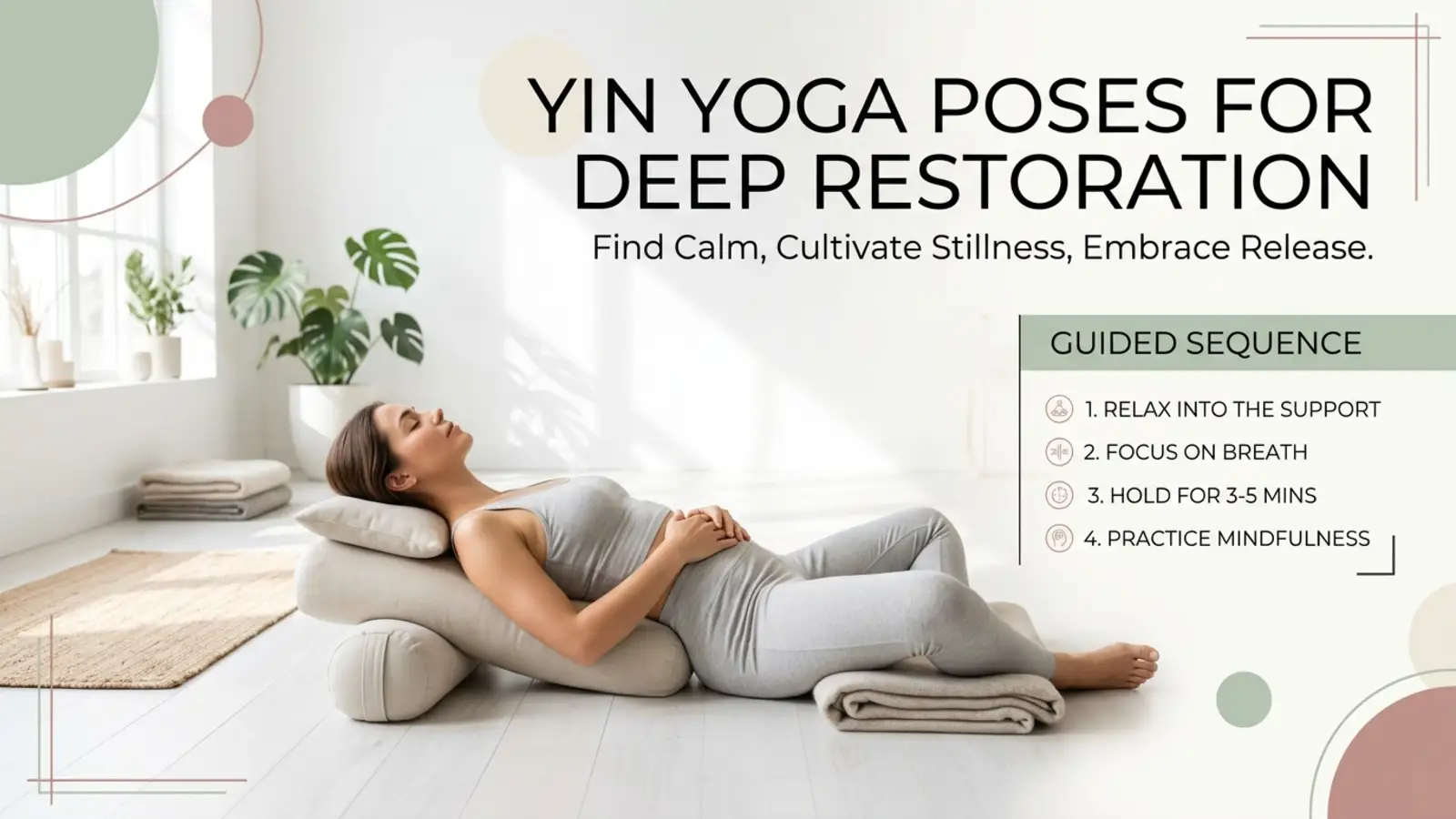
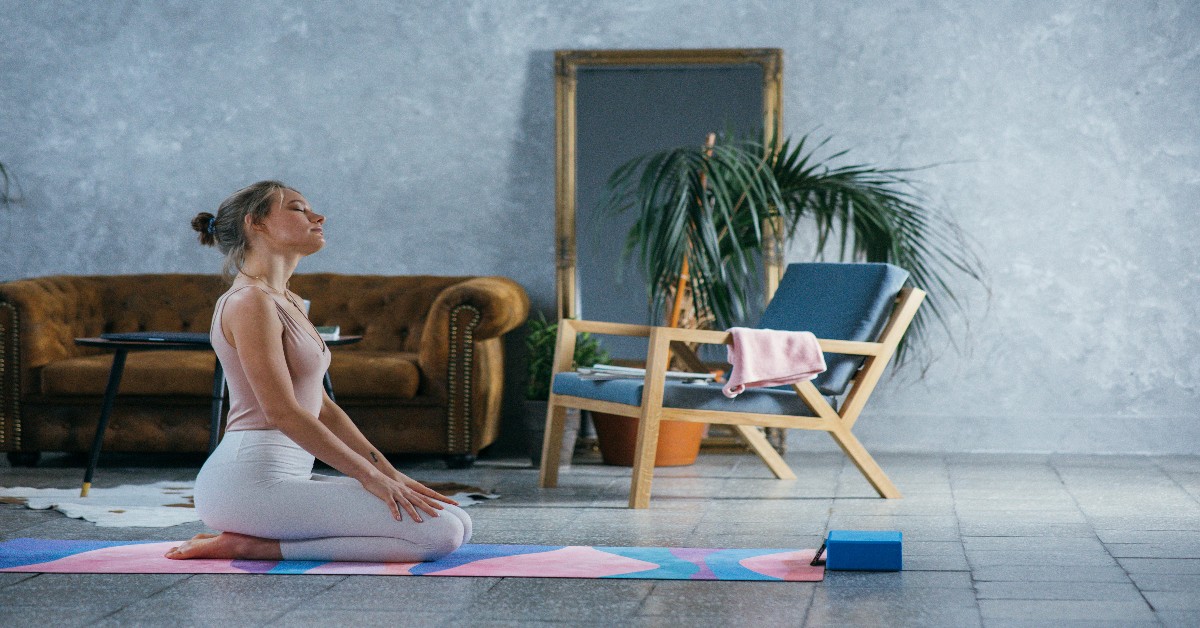
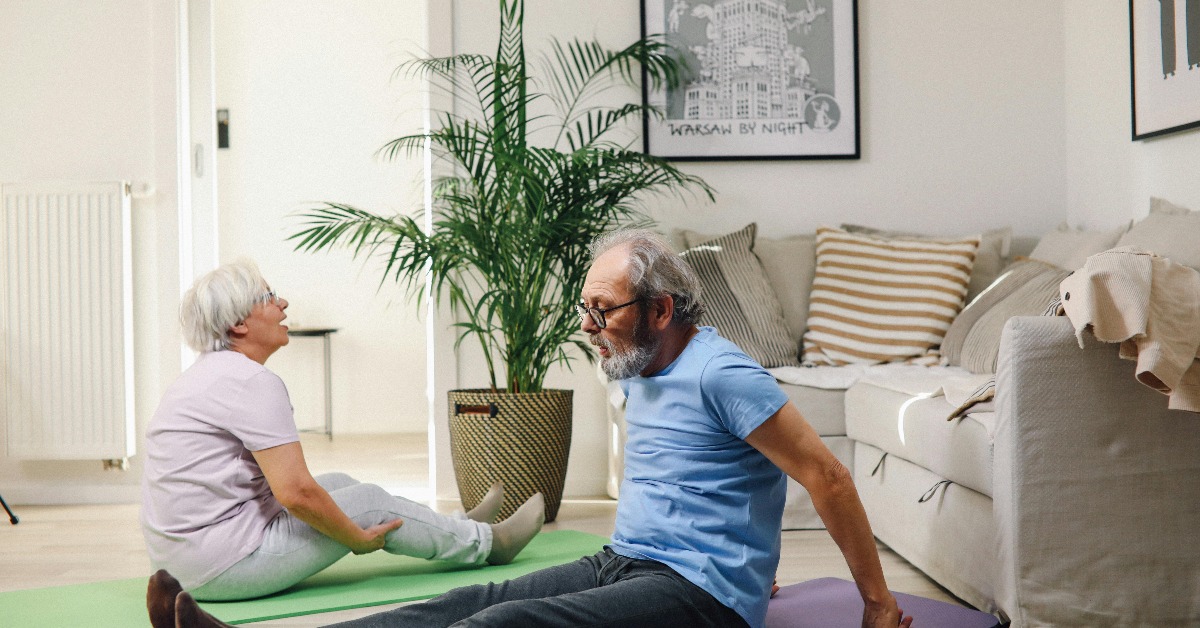
Gentle yoga can be practiced on a yoga mat, carpet, or another stable surface. Beginners can also use a chair, cushion, blanket, or yoga blocks for extra support.
What Are the Benefits of Gentle Yoga?
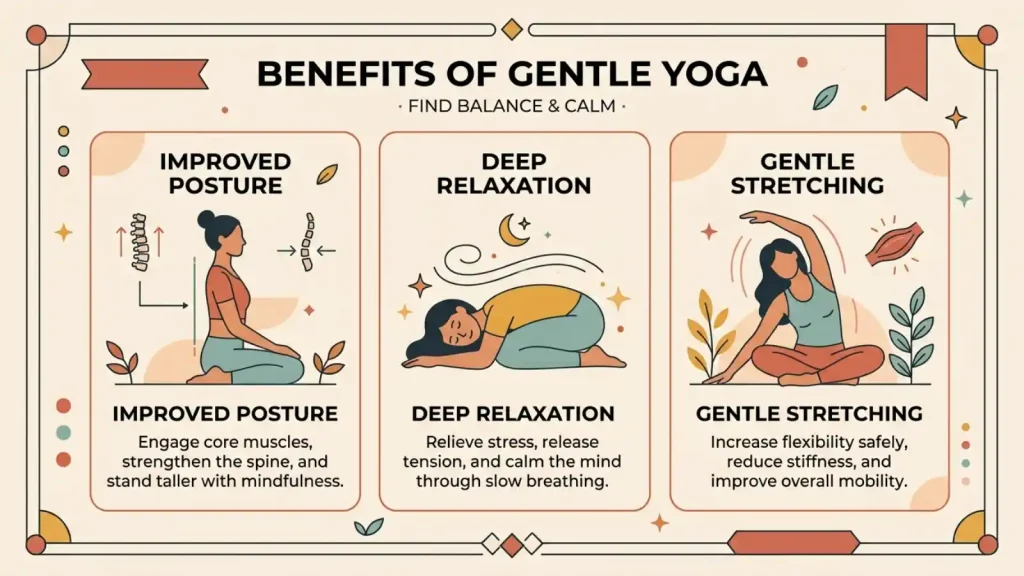
Regular gentle movement may support both physical and mental well-being. The results can vary from person to person, but several benefits make this practice appealing to beginners.
1. May Improve Flexibility
Slow stretches can help your body move through a comfortable range of motion. With regular practice, you may notice that everyday movements feel easier.
2. Supports Relaxation
Gentle yoga combines movement with slow breathing. This can create a calm routine and give you time to step away from daily stress.
3. May Improve Balance
Simple standing poses can help you practice body awareness and balance. Beginners can hold a chair or wall for support when needed.
4. Encourages Better Body Awareness
Gentle yoga teaches you to notice how your body feels. This can help you recognize when a movement feels comfortable and when you are pushing too far.
5. Can Be Easy to Fit Into Your Day
You do not always need a long workout. Even a short session can provide an opportunity to stretch, breathe, and move.
Best Gentle Yoga Poses for Beginners
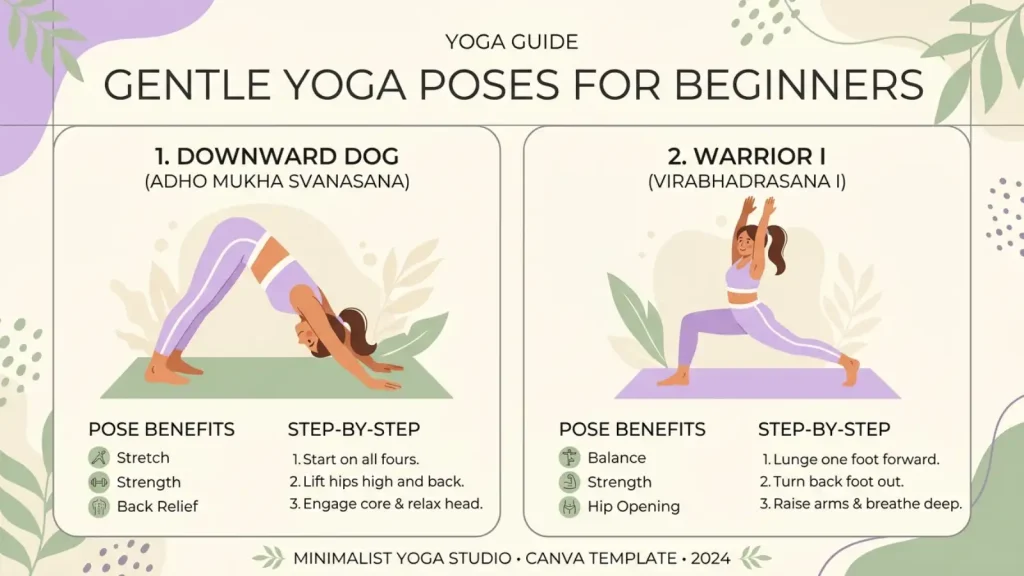
You can start with simple poses that do not require advanced flexibility.
Cat-Cow Stretch
Start on your hands and knees. Slowly round your back, then gently lift your chest and tailbone as you move in the opposite direction.
Move slowly with your breathing.
Beginner tip: Keep the movement small. You do not need to create a deep curve in your spine.
Child’s Pose
Kneel on the floor and slowly lower your upper body toward your thighs. Let your arms rest forward or beside your body.
Use a cushion or folded blanket under your body if that feels more comfortable.
Seated Forward Fold
Sit with your legs comfortably extended or slightly bent. Slowly lean forward without forcing yourself to reach your feet.
The aim is a gentle stretch, not touching your toes.
Mountain Pose
Stand comfortably with your feet about hip-width apart. Keep your shoulders relaxed and your arms by your sides.
Take slow breaths while noticing your posture and balance.
Gentle Seated Twist
Sit comfortably and slowly turn your upper body to one side. Keep the movement easy and avoid forcing your spine.
Return to the center and repeat on the other side.
How to Start a Gentle Yoga Routine
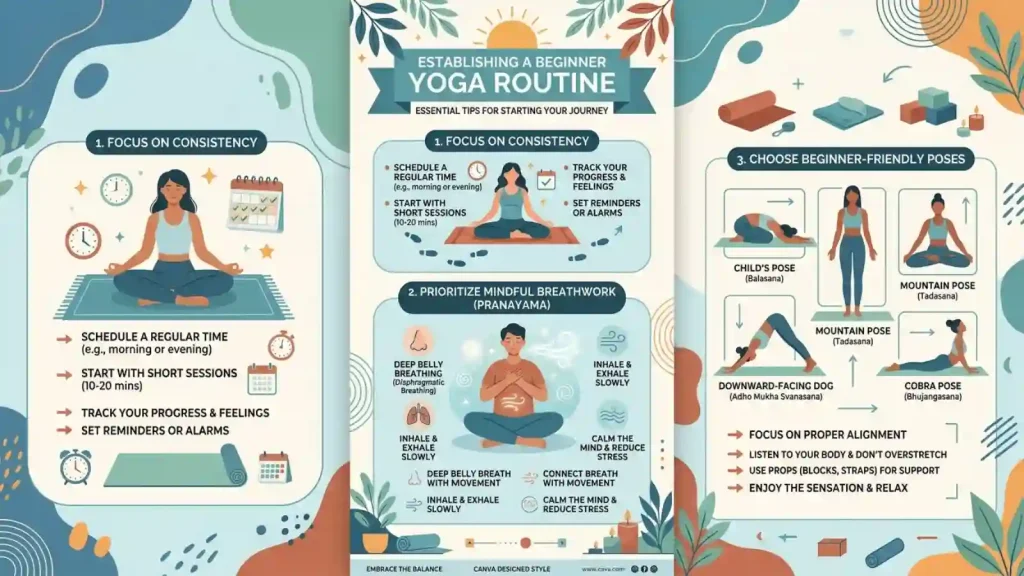
Starting small is often the easiest way to build a lasting habit.
1. Choose a Comfortable Time
Pick a time when you are unlikely to be rushed. Morning, afternoon, or evening can work.
2. Start With 10 Minutes
You do not need an hour-long session. Begin with about 10 minutes and increase the time if it feels comfortable.
3. Warm Up Slowly
Begin with easy movements such as shoulder rolls, gentle neck movements, or slow walking in place.
4. Choose Three to Five Easy Poses
Keep your first routine simple. Spend a few comfortable breaths in each pose rather than trying to do many movements.
5. Finish With Relaxation
End by sitting or lying comfortably for a few minutes. Take slow breaths and allow your body to relax.
The key is consistency, not intensity.
Common Gentle Yoga Mistakes to Avoid
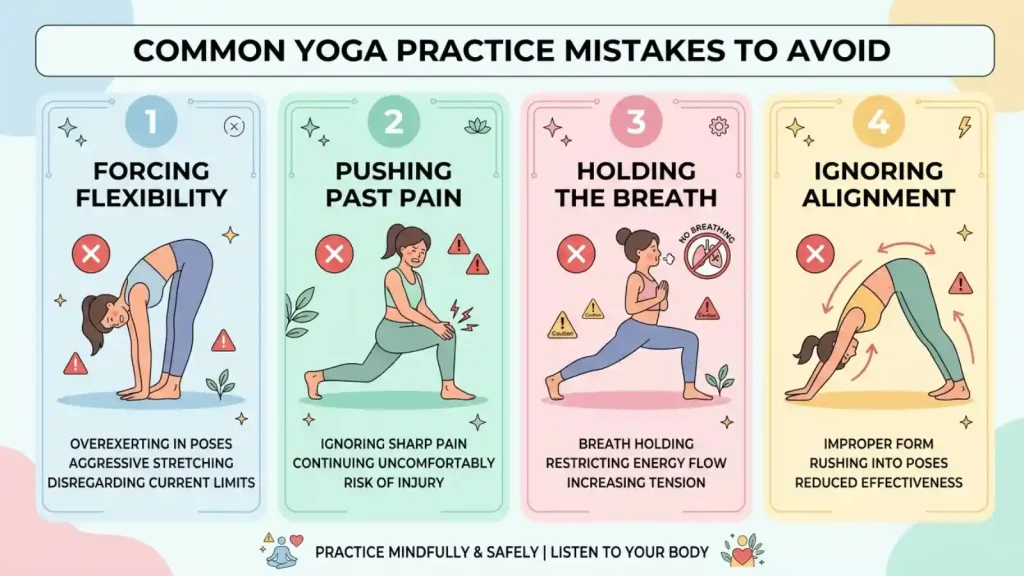
Even a gentle practice should be approached with care.
- Forcing a stretch: A deeper stretch is not always better.
- Holding your breath: Try to breathe naturally and steadily.
- Moving too quickly: Slow movements make it easier to stay in control.
- Comparing yourself with others: Flexibility differs from person to person.
- Ignoring pain: Mild stretching may feel challenging, but sharp or unusual pain is a reason to stop.
- Doing too much too soon: Give your body time to adjust.
If you have an injury, medical condition, pregnancy-related concern, or another special health consideration, consider getting appropriate professional guidance before starting or changing an exercise routine.
How Often Should You Practice Gentle Yoga?
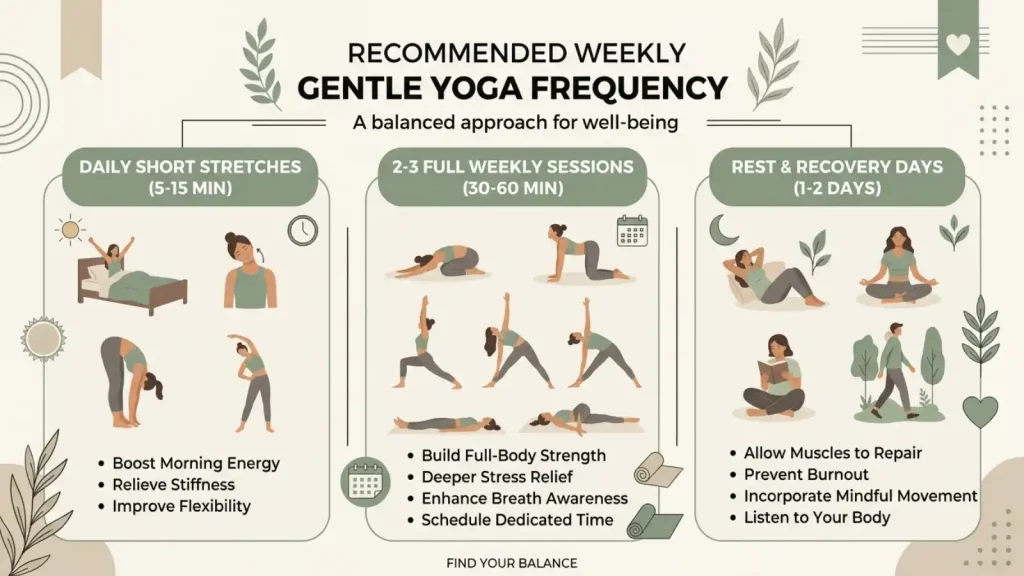
There is no single schedule that works for everyone. A simple starting point is 10–20 minutes several times a week.
Some people may prefer short daily sessions, while others may practice two or three times each week.
Try to make your routine realistic. A short practice that you can maintain is usually more useful than an ambitious routine that you quickly stop.
You can also add small movements to your normal day. For example, take a few gentle stretches after sitting for a long time or practice slow breathing before bed.
Conclusion
Gentle yoga offers a simple way to move, stretch, breathe, and slow down. You do not need advanced skills, impressive flexibility, or a long workout to begin. Start with a few comfortable poses, move slowly, and pay attention to how your body feels. With regular practice, gentle yoga may support flexibility, balance, relaxation, and body awareness. Start with just 10 minutes today and focus on comfortable, controlled movement rather than perfection.
FAQs
1. Is gentle yoga good for beginners?
Yes. Gentle yoga is designed around slow, controlled movements and can be adapted to different comfort and fitness levels.
2. Can I do gentle yoga if I am not flexible?
Yes. You do not need to be flexible to start. Use smaller movements and simple modifications, and allow flexibility to develop gradually.
3. How long should a gentle yoga session be?
Beginners can start with about 10–20 minutes. You can gradually increase the duration if your body feels comfortable.
4. Can gentle yoga help with stress?
It may support relaxation because it combines slow movement, breathing, and focused attention. It can be a useful part of a broader stress-management routine.
5. Can I practice gentle yoga every day?
Many people can include gentle movement in a daily routine, but the right frequency depends on your body and overall health. Avoid movements that cause pain and give yourself rest when needed.