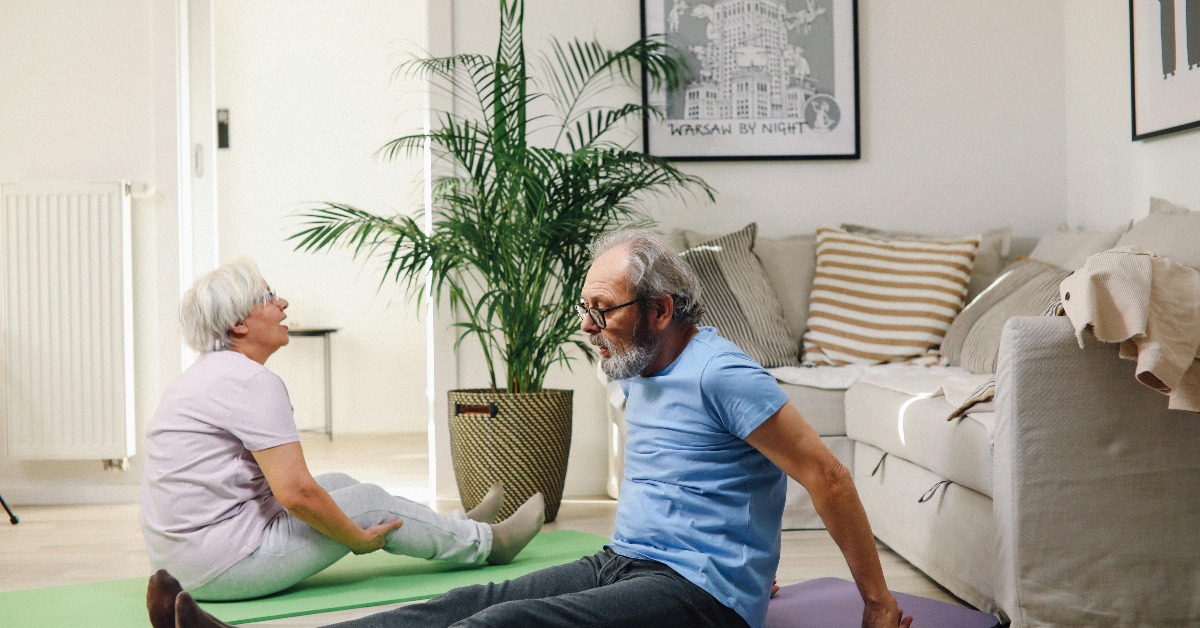
Practicing 2 person yoga poses is an enjoyable way to improve flexibility, strength, balance, and coordination while spending quality time with someone else. Unlike solo yoga, partner yoga requires two people to work together, helping each other maintain stability, proper alignment, and confidence throughout every movement.
The best part is that you do not need advanced experience to begin. Many beginner 2 person yoga poses are simple to learn, making them ideal for friends, couples, or family members. With regular practice, partner yoga can increase mobility, improve posture, reduce stress, and build trust between partners.
In this guide, you’ll discover the best 2-person yoga poses for beginners, their benefits, step-by-step instructions, safety tips, and common mistakes to avoid.
Table of Contents
- What Is Partner Yoga?
- Benefits of 2 Person Yoga Poses
- How to Prepare
- Best 2 Person Yoga Poses for Beginners
- Safety Tips
- Common Mistakes
- Beginner vs Intermediate vs Advanced Poses
- Vocabulary
- Conclusion
- FAQs
What Is Partner Yoga?
Partner yoga is a form of yoga where two people perform poses together. Instead of practicing alone, partners assist each other by providing support, balance, and gentle resistance. This makes stretching deeper and balancing easier while creating a fun, interactive experience.
Many people enjoy partner yoga exercises because they combine physical fitness with teamwork. Practicing together also encourages communication and helps both partners stay motivated.
Benefits of 2 Person Yoga Poses
Second, doing yoga poses on a regular basis has various advantages for both mental and physical health.
| Benefit | Description |
| Improves Flexibility | Helps muscles stretch safely and effectively. |
| Builds Strength | Engages the core, legs, arms, and back. |
| Enhances Balance | Improves coordination and body control. |
| Reduces Stress | Encourages deep breathing and relaxation. |
| Builds Trust | Strengthens communication and teamwork. |
| Improves Posture | Supports better spinal alignment. |
| Increases Motivation | Exercising with a partner keeps you consistent. |
How to Prepare Before Practicing
To enjoy easy 22-personyoga poses safely, follow these simple preparation tips.
Warm Up
Spend 5–10 minutes warming up with shoulder rolls, gentle twists, hip circles, and light stretches. Warming up lowers the chance of injury and prepares your muscles.
Choose a Comfortable Space
Practice on a non-slip yoga mat in an open area with enough room to move freely.
Communicate Clearly
Tell your partner if you feel discomfort or need to adjust a pose. Good communication is essential for safe and successful partner yoga.
Best 2 Person Yoga Poses for Beginners
1. Seated Back-to-Back Twist
This gentle twisting pose improves spinal mobility and posture.
Steps
- Sit back-to-back with crossed legs.
- Inhale and lengthen your spine.
- Exhale while twisting to the right.
- Put one hand on your knee and the other on the knee of your partner.
- Hold for 20–30 seconds before switching sides.
Benefits
- Increases spinal flexibility
- Reduces back stiffness
- Improves posture
- Encourages synchronized breathing
2. Double Tree Pose
One of the easiest partner yoga poses for beginners, Double Tree Pose improves balance and concentration.
Steps
- Stand side by side.
- Place your inside arms around each other’s shoulders.
- Shift your weight onto one foot.
- Place the other foot against your inner calf or thigh.
- Hold for 20 seconds and repeat on the other side.
Benefits
- Strengthens the legs
- Improves balance
- Develops focus
- Builds confidence
3. Partner Forward Fold
This pose is one of the best partner yoga stretches for improving flexibility.
Steps
- Sit facing your partner with legs extended.
- Hold each other’s wrists.
- One partner gently leans backward while the other folds forward.
- Hold for 20–30 seconds and switch roles.
Benefits
- Stretches the hamstrings
- Improves lower back flexibility
- Relieves muscle tension
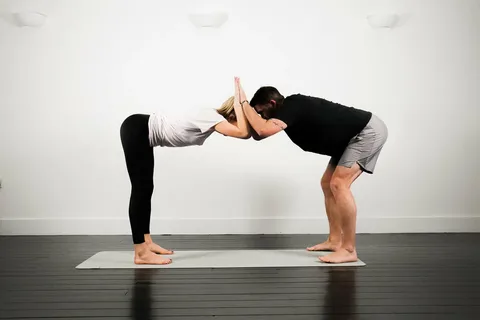
4. Temple Pose
Temple Pose is simple yet highly effective for stretching the shoulders, back, and chest.
Steps
- Stand facing your partner.
- Press your palms together while raising your arms.
- Slowly lean your upper body forward while keeping your spine straight.
- Hold the position for 20–30 seconds.
Benefits
- Opens the chest
- Improves posture
- Increases shoulder flexibility
- Promotes better balance
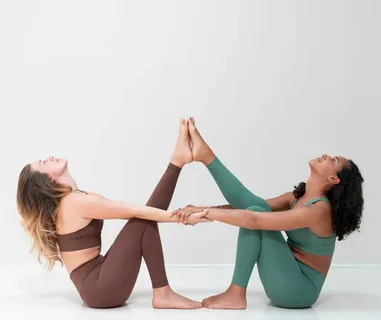
5. Partner Boat Pose
Boat Pose strengthens the core while improving balance and teamwork.
Steps
- Sit facing each other.
- Place the soles of your feet together.
- Hold each other’s hands.
- Lift your legs together while keeping your back straight.
- Hold for 15–20 seconds.
Benefits
- Strengthens abdominal muscles
- Improves coordination
- Enhances balance
- Builds core stability
These easy partner yoga poses create a strong foundation before progressing to more challenging movements. Focus on proper form rather than holding each pose for a long time.
Safety Tips for Partner Yoga
Practicing 2 person yoga poses is generally safe when both partners move carefully and communicate throughout each exercise. Following these safety tips will help you avoid injuries and enjoy a more comfortable practice.
1. Warm Up Before Every Session
Always spend 5–10 minutes warming up with light stretches and gentle movements. A proper warm-up prepares your muscles and joints for yoga.
2. Communicate with Your Partner
Talk to each other during every pose. If something feels uncomfortable, stop immediately and adjust your position.
3. Move Slowly
Avoid rushing into or out of poses. Slow, controlled movements improve balance and reduce the risk of falls or muscle strain.
4. Never Force a Stretch
Stretch only until you feel gentle tension. Yoga should never cause sharp pain.
5. Use Proper Equipment
Practice on a non-slip yoga mat and wear comfortable clothing that allows free movement.
Common Mistakes to Avoid
Many beginners make simple mistakes that can affect both safety and progress.
- Skipping the warm-up before practicing.
- Holding your breath instead of breathing slowly.
- Moving too quickly between poses.
- Ignoring your partner’s comfort level.
- Trying advanced poses before mastering beginner movements.
- Focusing on perfection instead of proper alignment.
Avoiding these mistakes will help you enjoy a safer and more effective partner yoga practice.
Beginner vs Intermediate vs Advanced Partner Yoga
| Level | Difficulty | Recommended Poses |
| Beginner | Easy | Seated Twist, Double Tree, Temple Pose, Partner Forward Fold |
| Intermediate | Moderate | Partner Boat Pose, Warrior Pose, Standing Backbend |
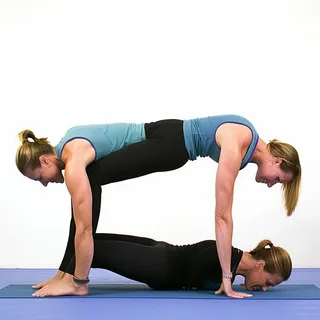
| Advanced | Challenging | Partner Plank, Flying Bow Pose, Acro Yoga Balances |
Start with beginner poses and progress only when both partners feel comfortable and confident.
Tips to Improve Your Partner Yoga Practice
Remember these pointers if you wish to perform partner yoga poses more effectively:
- Practice three to five times each week.
- Focus on steady breathing throughout each pose.
- Support your partner without forcing movements.
- Maintain good posture during every exercise.
- Increase difficulty gradually as your flexibility and strength improve.
- Enjoy the process and celebrate small improvements together.
Consistency is the key to building strength, flexibility, and confidence.
Why Try 2 Person Yoga?
Whether you practice with a friend, family member, or partner, two person yoga poses offer a fun and rewarding way to stay active. These exercises not only improve physical fitness but also encourage trust, teamwork, and mindfulness.
Regular practice can help you:
- Increase flexibility
- Build strength
- Improve balance
- Reduce stress
- Enhance posture
- Strengthen communication
- Stay motivated through shared goals
Because many poses require cooperation, partner yoga creates a unique experience that is both enjoyable and beneficial for overall well-being.
Vocabulary
| Word | Meaning |
| Alignment | Correct body position during a pose |
| Flexibility | The ability to stretch muscles and joints |
| Balance | Maintaining body stability |
| Core | Muscles of the abdomen and lower back |
| Coordination | Moving body parts smoothly together |
| Mobility | Full range of joint movement |
| Posture | The way you hold your body |
| Mindfulness | Being fully aware of the present moment |
| Stability | The ability to stay steady |
| Acro Yoga | A style of partner yoga that combines yoga and balancing techniques |
Conclusion
Learning 2 person yoga poses is a great way to improve your fitness while enjoying quality time with someone else. From simple poses like the Seated Back-to-Back Twist and Double Tree Pose to more challenging movements as your skills grow, partner yoga offers benefits for both the body and mind.
Start with easy 2-person yoga poses, focus on proper technique, communicate clearly with your partner, and practice consistently. Over time, you’ll notice better flexibility, improved balance, increased strength, and greater confidence. Whether your goal is relaxation, fitness, or building a stronger connection with your partner, these partner yoga poses for beginners provide an excellent place to begin.
FAQs
Which two-person yoga poses are the greatest for beginners?
The best beginner poses include Seated Back-to-Back Twist, Double Tree Pose, Partner Forward Fold, Temple Pose, and Partner Boat Pose because they are simple, safe, and effective.
Can beginners practice partner yoga at home?
Yes. Most beginner partner yoga poses can be practiced safely at home with enough space, a yoga mat, and clear communication between partners.
What are the benefits of partner yoga?
Partner yoga improves flexibility, balance, strength, posture, coordination, communication, trust, and stress relief while making exercise more enjoyable.
How frequently should I do two-person yoga poses?
Practicing three to five times per week for 20–30 minutes is ideal for improving flexibility, strength, and overall fitness.
Is partner yoga suitable for everyone?
Most healthy people can enjoy beginner partner yoga. However, anyone with recent injuries, severe joint problems, or medical conditions should consult a healthcare professional before attempting advanced poses.