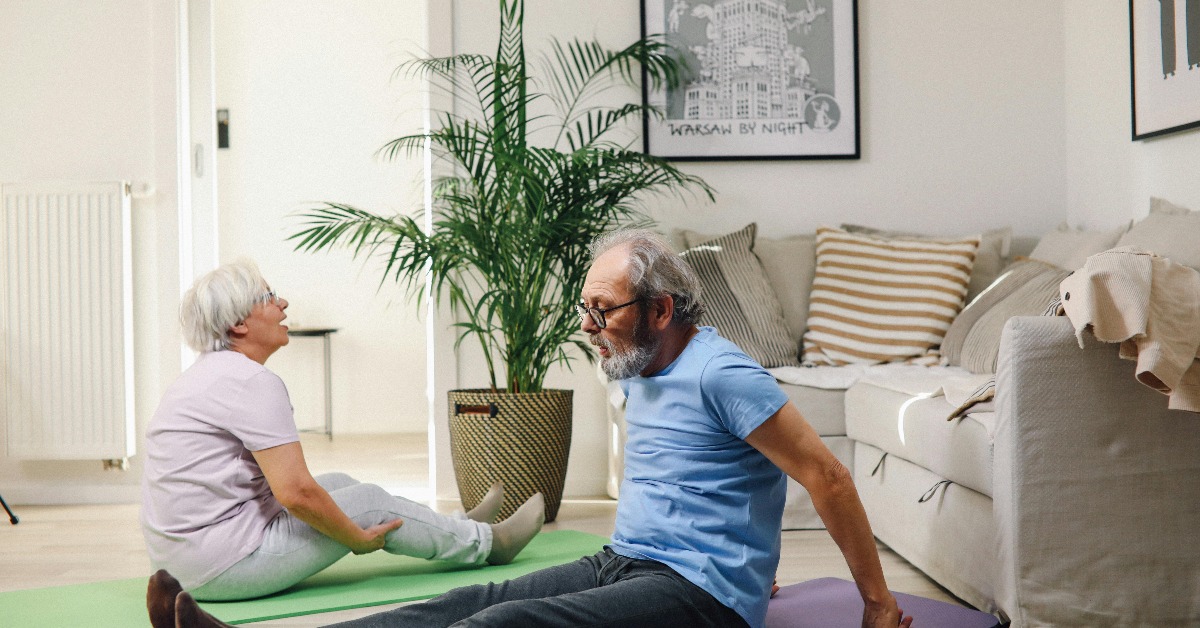
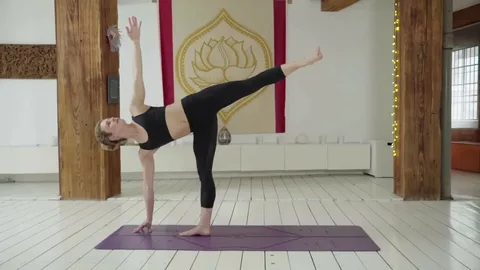
The half-moon yoga pose is one of the most effective standing balance postures in yoga. Known traditionally as ardha chandrasana, this pose combines balance, mobility, strength, and body awareness in a single movement.
Many yoga practitioners use the half-moon pose to improve stability, strengthen the hips and legs, and develop better coordination. However, poor alignment can reduce its benefits and increase the likelihood of losing balance.
In this guide, you’ll learn the benefits of ardha chandrasana, proper alignment techniques, common mistakes, advanced half-moon variations, and strength-building exercises that complement the pose.
What Is Half Moon Yoga Pose (Ardha Chandrasana)?
Understanding Ardha Chandrasana
The Sanskrit term for “half moon pose” is ardha chandrasana. It is a standing balancing position with the body and a raised leg extending outward while standing on one leg.
The pose challenges:
- Balance
- Core stability
- Hip mobility
- Lower-body strength
- Body awareness
Because it requires coordination and control, the half-moon yoga pose is often considered an intermediate-level yoga posture.
Key Biomechanics of Half Moon Pose
The pose relies on several important movement patterns:
| Function | Biomechanical Element |
| Hip rotation | Helps position the pelvis correctly |
| Hip horizontal abduction | Lifts the top leg away from the body |
| Hip external rotation | Opens the pelvis toward the side |
| Standing hip stability | Maintains balance on one leg |
| Core engagement | Prevents trunk collapse |
A major challenge in Ardha Chandrasana is maintaining standing hip stability while balancing on a single leg.
Benefits of Half Moon Yoga Pose
Improves Balance and Coordination
The half-moon pose develops body awareness by forcing the body to stabilize in multiple directions simultaneously.
Benefits include:
- Better balance control
- Improved coordination
- Greater joint awareness
- Enhanced athletic performance
The pose creates a significant coordination challenge that improves neuromuscular control over time.
Builds Lower-Body and Hip Strength
Several muscles work hard during the pose, including:
- Hip abductor muscles
- Hip rotator muscles
- Gluteus medius
- Hamstrings
- Quadriceps
This makes the pose beneficial for both leg strength for yoga and hip strength for yoga.
Enhances Functional Movement
Unlike many traditional exercises, the half-moon pose trains frontal-plane movement.
Benefits include:
- Better side-to-side stability
- Improved movement variability
- Greater hip control
- Reduced movement limitations
Supports Yoga Strength Training
The pose contributes to yoga strength training by placing controlled loads in yoga poses.
Over time, this may lead to the following:
- Improved muscular endurance
- Better balance capacity
- Enhanced strength adaptations
- Greater postural control
How to Perform Half Moon Yoga Pose Correctly
Step-by-Step Instructions
- Begin in Triangle Pose.
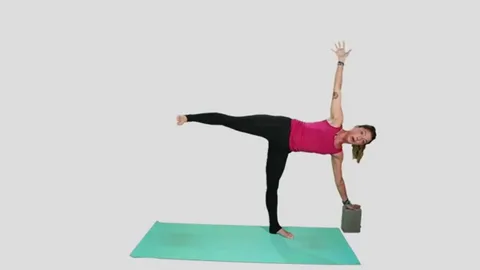
- Place your lower hand on a block or floor.
- Shift weight onto the front foot.
- Lift the back leg parallel to the floor.
- Open the chest toward the side wall.
- Extend the upper arm upward.
- Maintain steady breathing.
- Hold for 20–40 seconds.
Alignment Tips for Better Stability
For optimal alignment:
- Maintain a soft, not locked, standing knee.
- Engage the abdominal muscles.
- Stack the hips vertically.
- Lengthen through both legs.
- Keep the chest open.
- Focus on a fixed point for balance.
These adjustments improve standing hip stability and overall control.
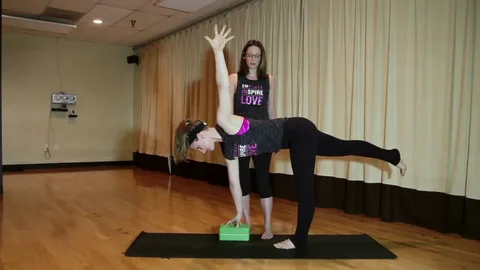
Typical Half Moon Pose Errors and How to Correct Them
Collapsing Through the Standing Leg
Problem:
The supporting hip drops toward the floor.
Solution:
Actively engage the glute muscles and maintain alignment through the standing leg.
Poor Hip Positioning
Problem:
Insufficient hip rotation and loss of hip external rotation.
Solution:
Open the pelvis gradually while maintaining core stability.
Over-Relying on Flexibility Instead of Strength
Problem:
Practitioners often focus on flexibility while ignoring muscular control.
Solution:
Include yoga strength training exercises regularly.
Losing Balance During Dynamic Movement
Problem:
Movement becomes unstable when transitioning.
Solution:
Slow down transitions and strengthen stabilizing muscles.
Challenging Half Moon Variations for Strength and Stability
Half Moon Squat
The half-moon squat adds movement to the traditional pose.
Benefits:
- Improves control
- Creates a balance challenge
- Enhances movement variability
This half-moon squat variation resembles a single-leg squat performed in the frontal plane rather than the sagittal plane.
The movement involves a dynamic knee bend and straightening pattern, making it a novel movement for many practitioners.
Half Moon to Warrior 3 Rotations
Half moon to warrior 3 rotations train rotational control and balance.
Benefits:
- Better hip stability
- Improved body awareness
- Enhanced balance
These warrior 3 to half-moon rotations involve a closed-to-open hip transition that challenges coordination.
Half Moon Leg Lifts
Half-moon leg lifts increase the demand on the hip stabilizers.
Benefits:
- Stronger abductors
- Better endurance
- Increased control
Advanced practitioners may perform resisted half-moon leg lifts using a resistance band.
A half-moon with a resistance band variation adds additional muscular demand.
Strength-Building Alternatives to Half Moon Variations
Sumo Squat for Hip Strength
The sumo squat places the hips in a similar position while providing greater stability.
Benefits:
- Builds lower-body strength
- Allows progressive overload
- Improves hip control
A kettlebell goblet squat can further increase resistance.
Because both feet remain grounded, the sumo squat for hip strength is often superior when strength is the primary goal.
This position resembles both the goddess pose and the horse stance commonly used in yoga.
Forearm Side Plank with Leg Lifts
The forearm side plank with leg lifts targets the hips effectively.
Benefits:
- Strong hip abductors
- Improved core stability
- Better lateral strength
Compared with side plank leg raises, this variation often provides a more controlled strengthening stimulus.
Understanding Movement Science Behind the Half Moon Pose
Frontal Plane vs Sagittal Plane Movement
| Movement Plane | Example |
| Frontal Plane Movement | Half Moon Pose |
| Sagittal Plane Movement | Squat, Lunge |
Half moon differs from traditional exercises because it primarily challenges lateral stability.
Stability, Strength, and Coordination
Training goals determine exercise selection.
For coordination:
- Half-moon variations work well.
For strength:
- Stable positions for strength are often more effective.
How to Progress Safely in Half Moon Yoga Pose
Beginner Modifications
- Use a yoga block
- Practice near a wall
- Shorten hold times
Intermediate Progressions
- Add controlled transitions
- Increase hold duration
- Improve balance control
Advanced Progressions
- Practice challenging half-moon variations
- Use resistance band yoga drills
- Add dynamic balance challenges
10 Words and Meanings
| Word | Meaning |
| Ardha Chandrasana | Sanskrit name for Half Moon Pose |
| Abduction | Movement away from the body’s center |
| Rotation | Turning around an axis |
| Stability | Ability to maintain control |
| Mobility | Freedom of movement in joints |
| Alignment | Proper body positioning |
| Coordination | Smooth control of movement |
| Balance | Ability to remain steady |
| Adaptation | Physical improvement from training |
| Resistance | External force challenging muscles |
Conclusion
The half-moon yoga pose is an excellent posture for improving balance, coordination, hip strength, and body awareness. Proper alignment helps maximize benefits while reducing common mistakes. Whether you practice traditional ardha chandrasana or explore advanced half-moon variations, consistent training can improve both stability and strength. Pairing the pose with complementary exercises such as the sumo squat and forearm side plank with leg lifts can further enhance your results and support long-term progress.
FAQS
What are the benefits of the Half Moon Yoga Pose?
Half Moon Pose improves balance, strengthens the legs and hips, enhances coordination, and increases body awareness.
Is Half Moon Pose suitable for beginners?
Yes, beginners can practice it using a yoga block or wall for extra support.
How long should I hold Half Moon Pose?
Hold the pose for 20-40 seconds on each side, or as long as you can maintain proper alignment.
What muscles does Ardha Chandrasana work?
It primarily works the glutes, hip abductors, hip rotators, core muscles, hamstrings, and quadriceps.
Why do I lose balance in Half Moon Pose?
Loss of balance usually occurs due to weak hip stabilizers, poor alignment, lack of core engagement, or shifting your gaze too much.