Practicing 2-person yoga poses is an enjoyable way to improve flexibility, balance, strength, and communication while spending quality time with a partner. Unlike solo yoga, partner yoga encourages teamwork by requiring both participants to synchronize their movements, breathing, and balance.
Whether you’re practicing with a friend, family member, or significant other, partner yoga poses help build trust while making exercise more engaging. Many beginner-friendly poses require little experience, making them suitable for almost anyone.
In this guide, you’ll discover the best two-person yoga poses, learn their benefits, understand proper techniques, and find helpful safety tips for practicing yoga with a partner.
Why Practice Partner Yoga?
Partner yoga offers benefits beyond physical fitness. Working together during each pose improves communication and creates a stronger sense of connection.
Some of the biggest benefits include:
- Improves flexibility
- Builds core and leg strength
- Enhances balance and coordination
- Encourages teamwork
- Develops trust between partners
- Makes yoga more enjoyable
- Reduces stress
- Improves posture
- Supports mindful breathing
- Suitable for beginners and experienced yogis
Unlike traditional yoga, yoga poses for two challenge both participants to maintain balance while supporting one another.
Is Partner Yoga Suitable for Beginners?
Yes. Many beginner partner yoga poses are designed specifically for people with little or no yoga experience.
Start with simple poses that focus on:
- Communication
- Proper alignment
- Controlled breathing
- Balance
- Gentle stretching
Avoid advanced balancing or acrobatic poses until both partners feel comfortable with the basics.
Essential Safety Tips Before Starting
Following a few simple guidelines can help prevent discomfort and make your practice more enjoyable.
| Safety Tip | Why It Matters |
| Warm up first | Prepares muscles and joints |
| Communicate clearly | Prevents sudden movements |
| Match your breathing | Improves coordination |
| Move slowly | Reduces injury risk |
| Respect flexibility limits | Prevents overstretching |
| Use a yoga mat | Improves grip and stability |
| Support each other | Builds confidence |
Best Easy 2-Person Yoga Poses
1. Seated Back-to-Back Breathing
This is one of the easiest partner yoga poses and a great starting point.
How to Do It
- Sit comfortably back-to-back.
- Cross your legs.
- Rest your hands on your knees.
- Sit tall with a straight spine.
- Breathe slowly together for one to three minutes.
Benefits
- Improves posture
- Encourages mindful breathing
- Relaxes the body
- Builds connection
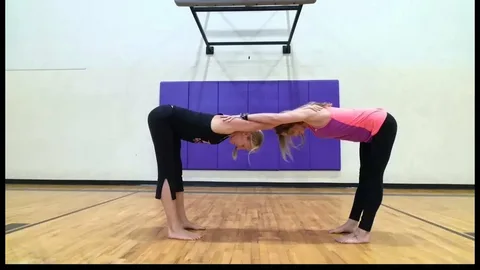
2. Partner Forward Fold
A gentle stretch that helps improve flexibility in the back and hamstrings.
How to Do It
- Sit facing each other.
- Extend your legs forward.
- Hold each other’s wrists or hands.
- One partner leans back slightly while the other folds forward.
- Switch roles after several breaths.
Benefits
- Stretches hamstrings
- Improves flexibility
- Relieves lower back tension
- Encourages teamwork
3. Double Tree Pose
One of the most popular partner balance poses.
How to Do It
- Stand beside your partner.
- Wrap your inside arms around each other’s shoulders or waist.
- Lift your outside foot onto your standing leg.
- Press your palms together with your free hands.
- Hold for 20–30 seconds.
Benefits
- Improves balance
- Strengthens legs
- Enhances concentration
- Builds stability
4. Partner Chair Pose
This pose strengthens the lower body while improving coordination.
How to Do It
- Stand back-to-back.
- Lock your elbows or hold hands.
- Slowly bend your knees together.
- Lower until both thighs are nearly parallel to the floor.
- Hold for several breaths.
Benefits
- Strengthens thighs
- Builds endurance
- Improves posture
- Develops trust
5. Double Downward-Facing Dog
A fun variation for partners with some yoga experience.
How to Do It
- One partner begins in Downward-Facing Dog.
- The second partner carefully places their hands on the floor in front of the first partner.
- Step one foot at a time onto the first partner’s hips.
- Lift into a stable downward dog position.
- Hold briefly before carefully stepping down.
Benefits
- Strengthens shoulders
- Improves flexibility
- Builds balance
- Enhances teamwork
Why Breathing Together Matters
Breathing in sync is one of the most important aspects of partner yoga. Throughout each posture, coordinated breathing facilitates more fluid movement, balance, and connection for both partners.
Tips for synchronized breathing:
- Inhale before entering a pose.
- Exhale during stretches or transitions.
- Maintain a steady rhythm.
- Avoid holding your breath.
- Communicate if either partner needs to pause.
Intermediate 2-Person Yoga Poses
Once you’ve mastered the basics, you can try slightly more challenging two-person yoga poses that require better balance, flexibility, and coordination.
6. Partner Boat Pose
Partner Boat Pose is excellent for strengthening the core while improving balance.
How to Do It
- Sit facing each other.
- Bend your knees and hold each other’s hands.
- Press the soles of your feet together.
- Slowly straighten your legs while balancing.
- Engage your core and maintain a tall spine.
Benefits
- Strengthens the core
- Improves balance
- Builds coordination
- Increases hip flexibility
7. Partner Twist
This gentle stretch improves spinal mobility while encouraging synchronized breathing.
How to Do It
- Sit back-to-back.
- Cross your legs comfortably.
- Inhale to lengthen your spine.
- Exhale and twist to one side.
- Place one hand on your knee and the other on your partner’s knee.
- Hold, then repeat on the opposite side.
Benefits
- Improves spinal mobility
- Releases back tension
- Enhances posture
- Encourages mindful breathing
8. Standing Backbend
A simple standing stretch that opens the chest and shoulders.
How to Do It
- Stand back-to-back.
- Link your arms with your partner.
- Slowly lean backward together.
- Keep your core engaged.
- Return to standing with control.
Benefits
- Opens the chest
- Improves posture
- Increases spinal flexibility
- Builds trust
Advanced Partner Yoga Poses
These advanced partner yoga poses require strength, stability, and excellent communication. Attempt them only after mastering beginner and intermediate poses.
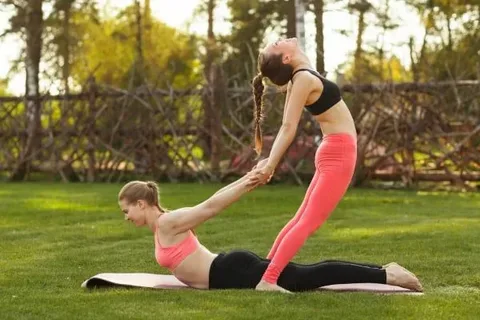
9. Flying Plank
Benefits
- Strengthens the core
- Builds upper-body strength
- Improves balance
- Enhances teamwork
10. Front Bird Pose
One partner supports the other using their legs while the flyer extends into a balanced position.
Benefits
- Improves stability
- Builds confidence
- Strengthens the entire body
- Increases flexibility
11. Throne Pose
A challenging pose that develops balance and communication.
Benefits
- Strengthens the legs
- Improves coordination
- Builds trust
- Enhances concentration
Standing Partner Yoga Poses
These standing partner yoga poses are ideal for improving balance and lower-body strength.
| Pose | Difficulty | Primary Benefit |
| Double Tree Pose | Beginner | Balance |
| Partner Chair Pose | Beginner | Leg Strength |
| Standing Backbend | Intermediate | Flexibility |
| Warrior Partner Stretch | Intermediate | Stability |
| Flying Plank | Advanced | Full-Body Strength |
Seated Partner Yoga Poses
If you’re looking for gentle seated partner yoga poses, these are excellent choices.
| Pose | Difficulty | Best For |
| Back-to-Back Breathing | Beginner | Relaxation |
| Partner Forward Fold | Beginner | Flexibility |
| Partner Twist | Beginner | Spine Mobility |
| Partner Boat Pose | Intermediate | Core Strength |
Couples Yoga Poses
Many couples’ yoga poses focus on connection, communication, and relaxation.
Popular options include:
- Seated Back-to-Back Breathing
- Double Tree Pose
- Partner Forward Fold
- Partner Boat Pose
- Standing Backbend
- Double Downward Dog
These poses can help couples improve teamwork while enjoying a shared wellness activity.
Tips for Successful Partner Yoga
Following a few best practices can make your sessions safer and more enjoyable.
- Warm up before every practice.
- Choose poses that match both partners’ abilities.
- Maintain clear communication.
- Move slowly and avoid rushing.
- Focus on proper alignment.
- Support each other throughout the practice.
- Stop immediately if either partner feels pain.
Common Mistakes to Avoid
Avoiding these mistakes can improve your experience and reduce the risk of injury.
- Skipping warm-up exercises
- Holding your breath
- Forcing stretches beyond your flexibility
- Attempting advanced poses too early
- Ignoring your partner’s comfort level
- Losing communication during transitions
Remember that partner yoga is about cooperation rather than competition.
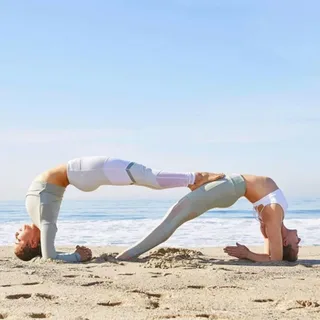
Beginner vs. Advanced Partner Yoga
| Feature | Beginner Partner Yoga | Advanced Partner Yoga |
| Difficulty | Easy | High |
| Balance Required | Low | High |
| Strength Required | Moderate | High |
| Flexibility | Basic | Advanced |
| Best For | New Practitioners | Experienced Yogis |
| Injury Risk | Low | Moderate to High if performed incorrectly |
How Often Should You Practice Partner Yoga?
For most people, practicing yoga two to three times per week is enough to improve flexibility, balance, strength, and coordination. As both partners gain confidence, sessions can be increased while ensuring adequate rest and recovery.
Conclusion
Practicing 2-person yoga poses is a fun and effective way to improve flexibility, strength, balance, and communication while enjoying quality time with a partner. Whether you’re trying easy partner yoga poses as a beginner or progressing to more advanced partner balances, the key is to move slowly, communicate clearly, and support each other throughout the practice.
Start with simple poses like Back-to-Back Breathing, Partner Forward Fold, and Double Tree Pose before advancing to more challenging movements. With consistent practice, you’ll build confidence, deepen your connection, and experience the many physical and mental benefits that partner yoga has to offer.
Frequently Asked Questions
1. What are the best 2 yoga poses for beginners?
Beginners should start with Back-to-Back Breathing, Partner Forward Fold, Double Tree Pose, Partner Chair Pose, and Partner Twist because they are easy to learn and help build balance, flexibility, and trust.
2. Is partner yoga suitable for beginners?
Yes. Many beginner partner yoga poses are designed for people with little or no experience. Starting with simple poses and focusing on communication helps create a safe and enjoyable practice.
3. What are the benefits of partner yoga?
Partner yoga improves flexibility, strength, balance, posture, coordination, communication, trust, and mindfulness while making yoga more interactive and enjoyable.
4. How often should two people practice partner yoga?
Practicing two to three times per week is ideal for most beginners. Consistent practice helps improve flexibility, balance, and overall fitness while allowing the body time to recover.
5. Is partner yoga the same as acro yoga?
No. Partner yoga focuses on stretching, balance, and cooperation, while acro yoga for beginners combines yoga with acrobatic movements and typically requires more strength, balance, and experience.