The rectus femoris muscle is one of the four muscles in the quadriceps muscle group located in the front thigh region. It plays a major role in hip flexion and knee extension, making it essential for walking, sprinting, squatting, jumping, and kicking.
Unlike the other quadriceps muscles, the rectus femoris is a two-joint muscle because it crosses both the hip joint and the knee joint. This unique structure allows it to act as both a hip flexor and a knee extensor during lower limb movements.
Because of its role in explosive movements and athletic performance, many athletes call it the “kicking muscle.”
Rectus Femoris Muscle Anatomy
Where Is the Rectus Femoris Located?
The rectus femoris is a long thigh muscle positioned in the center of the quadriceps muscle on the front of the femur. It extends from the pelvis to the tibia and helps produce dynamic movement in the lower extremity muscle system.
Key Structures Related to the Rectus Femoris
| Structure | Function |
| Femur | Main thigh bone beneath the muscle |
| Tibia | Receives force during knee extension |
| Patella | Improves leverage of the quadriceps tendon |
| Pelvis | Provides proximal attachment |
| Patellar Tendon | Connects muscle force to the tibial tuberosity |
Rectus Femoris Origin and Insertion
Proximal Attachment
The rectus femoris has two proximal attachment points:
- Anterior inferior iliac spine (AIIS)
- Superior rim of the acetabulum
These attachments connect the muscle to the pelvic muscle region and allow hip flexion.
Distal Attachment
Distally, the muscle joins the quadriceps tendon, attaches to the patella, and continues through the patellar tendon to the tibial tuberosity.
This arrangement allows efficient knee extension and force generation during locomotion.
Rectus Femoris Muscle Fibers and Pennation
The rectus femoris is a bipennate muscle, meaning the muscle fibers attach obliquely to a central tendon.
Benefits of Pennation
- Improves force production
- Enhances explosive power
- Supports sprinting and jumping
- Increases muscle efficiency during athletic movements
Its pennation pattern makes it an excellent sprinting muscle and running muscle.
Rectus Femoris Innervation and Blood Supply
Rectus Femoris Innervation
The femoral nerve (L2, L3, L4) supplies the rectus femoris muscle.
This muscle innervation allows the following:
- Muscle contraction
- Movement coordination
- Exercise movement control
- Muscle stabilization
Blood Supply of the Rectus Femoris
| Blood Supply Component | Structure |
| Arterial Supply | Femoral artery |
| Venous Drainage | Femoral vein |
Healthy circulation supports rehabilitation, muscle performance, and recovery after exercise.
What Is the Function of the Rectus Femoris Muscle?
Main Rectus Femoris Muscle Action
The primary rectus femoris muscle actions include the following:
- Hip flexion at the hip joint
- Knee extension at the knee joint
Because it crosses two joints, it functions as both
- Hip flexor
- Knee extensor
This combination is critical for functional movement and sports performance.
Role in Daily Functional Activities
The rectus femoris contributes to:
- Walking
- Squatting
- Climbing stairs
- Running
- Standing from a seated position
It also helps stabilize knee joint mechanics during movement.
Role in Sports and Athletic Performance
The rectus femoris is heavily involved in:
- Sprinting
- Rapid hip flexion
- Jumping
- Kicking
- Explosive movements
Athletes depend on this muscle for explosive power and fast lower limb movements.
Why the Rectus Femoris Is Called the Kicking Muscle
The muscle combines hip flexion and knee extension simultaneously, which are the two main motions required during kicking.
This is why it is commonly known as the kicking muscle in sports science and biomechanics.
Types of Rectus Femoris Muscle Contraction
Concentric Contraction
During concentric contraction, the muscle undergoes muscle shortening to move.
Examples include:
- Straightening the knee
- Lifting the thigh during sprinting
Eccentric Contraction
During eccentric contraction, the muscle controls movement while lengthening.
Functions include:
- Controlled knee flexion
- Slowing hip extension
- Reducing injury risk during athletic performance
Isometric Contraction
During isometric contraction, the muscle produces force without movement.
This helps:
- Stabilize knee joint alignment
- Stabilize hip joint posture
- Improve muscle coordination
Rectus Femoris Biomechanics Explained
Understanding the Two-Joint Muscle Function
The rectus femoris is one of the best two-joint muscle examples in human anatomy.
Because it crosses both the hip joint and knee joint, it influences:
- Hip flexion
- Knee extension
- Movement control
- Muscle force distribution
This biomechanical phenomenon makes it highly important in the musculoskeletal system.
Rectus Femoris Active Insufficiency
Active insufficiency occurs when the muscle becomes too shortened to generate maximum force.
In the rectus femoris, this happens during:
- Simultaneous hip flexion
- Knee extension
This reduces the optimal length for force production and affects athletic performance.
Rectus Femoris Passive Insufficiency
Passive insufficiency occurs when the muscle cannot lengthen further.
This happens during:
- Hip extension
- Knee flexion
The prone quadriceps stretch commonly demonstrates this condition because the muscle stretch reaches its maximum length.
Common Rectus Femoris Injuries and Muscle Pain
Causes of Rectus Femoris Muscle Pain
Common causes include:
- Sprinting overload
- Sudden explosive movements
- Poor flexibility
- Muscle fatigue
- Overtraining
Common Rectus Femoris Injuries
| Injury | Cause |
| Quadriceps strain | Sudden forceful contraction |
| Tendon irritation | Repetitive movement |
| Muscle tightness | Poor recovery |
| Athletic fatigue | Excessive training load |
Physiotherapy and Rehabilitation
Physiotherapy focuses on:
- Rehabilitation
- Movement optimization
- Exercise prescription
- Strength and conditioning
- Exercise physiology improvements
These strategies improve muscle performance and recovery.
Best Rectus Femoris Exercises and Stretching
Rectus Femoris Strengthening Exercises
Best Exercises
- Squats
- Lunges
- Step-ups
- Resistance band exercises
- Sprint drills
These exercises improve force generation and athletic movements.
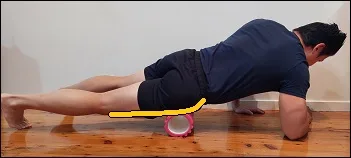
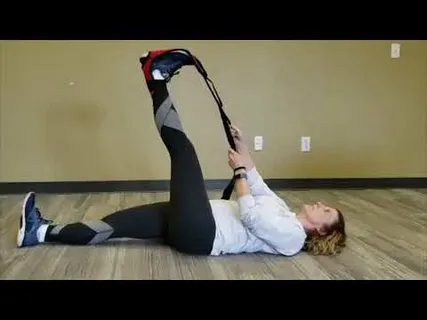
Best Rectus Femoris Stretch Exercises
Effective Stretches
- Prone quadriceps stretch
- Hip flexor stretch
- Dynamic warm-up drills
Stretching improves muscle lengthening and reduces injury risk.
Injury Prevention Tips
To protect the rectus femoris:
- Warm up before training
- Improve flexibility
- Follow proper recovery routines
- Use progressive strength training
- Focus on muscle stabilization
Why the Rectus Femoris Muscle Matters
Importance in the Musculoskeletal System
The rectus femoris supports:
- Functional activities
- Locomotion
- Dynamic movement
- Lower limb stability
- Exercise movement efficiency
It is a critical component of the human anatomy and movement system.
Importance for Athletes
Athletes rely on the rectus femoris for the following:
- Sprinting speed
- Jumping ability
- Kicking performance
- Rapid acceleration
- Sports performance
It is one of the most important muscles for sprinting and explosive athletic movements.
Conclusion
The rectus femoris muscle is a vital part of the quadriceps muscle group that controls both hip flexion and knee extension. Its unique role as a two-joint muscle makes it essential for locomotion, movement coordination, and sports performance.
From sprinting and jumping to walking and squatting, the rectus femoris contributes to nearly every major lower limb movement. Understanding its anatomy, biomechanics, muscle contraction patterns, and rehabilitation strategies can help improve muscle efficiency, prevent injury, and enhance athletic performance.
Frequently Asked Questions
1. What is the function of the rectus femoris muscle?
The rectus femoris performs hip flexion and knee extension, helping with walking, sprinting, kicking, and jumping.
2. Is the rectus femoris a hip flexor?
Yes. The rectus femoris acts as a hip flexor because it crosses the hip joint.
3. How does the rectus femoris help with knee extension?
It pulls through the quadriceps tendon and patellar tendon to straighten the knee.
4. Why is the rectus femoris called the kicking muscle?
It combines hip flexion and knee extension during kicking movements.
5. What are the best rectus femoris exercises?
Squats, lunges, sprint drills, and step-ups are highly effective.
6. How do you perform a rectus femoris stretch?
The prone quadriceps stretch is one of the best methods.
7. What causes rectus femoris muscle pain?
Overuse, sprinting, poor flexibility, and explosive sports movements commonly cause pain.
8. What is rectus femoris active insufficiency?
It is the reduced ability to generate force when the muscle is shortened at both joints.
9. What is rectus femoris passive insufficiency?
It occurs when the muscle cannot lengthen further during hip extension and knee flexion.
10. Why is the rectus femoris important for athletes?
It supports sprinting, jumping, explosive power, and overall athletic performance.