Introduction
Restorative yoga poses are gentle, supported yoga postures designed to promote deep relaxation, recovery, and nervous system balance. Unlike active yoga styles that build strength or flexibility, restorative yoga focuses on stillness, comfort, and breath awareness.
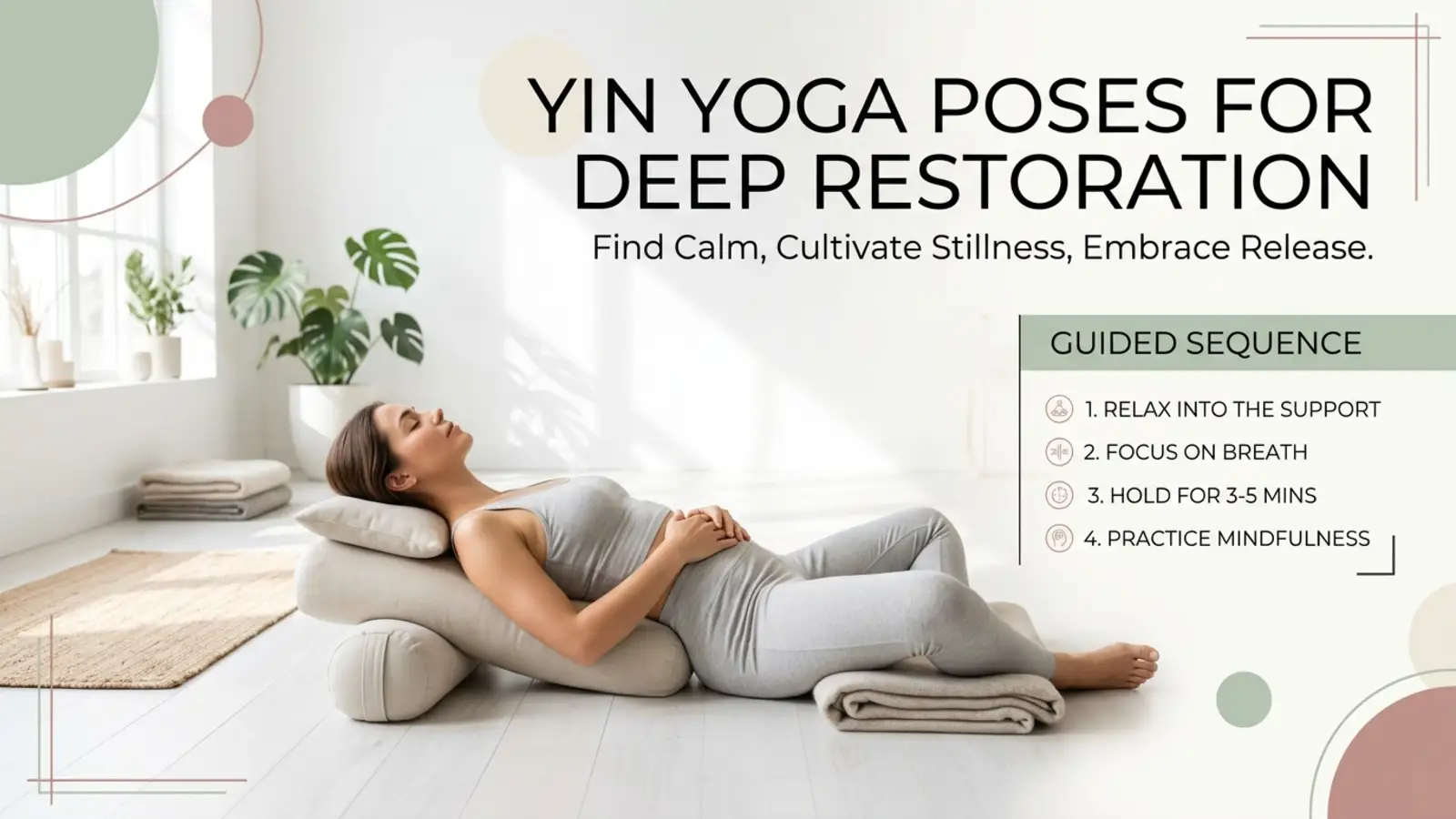
A restorative yoga practice uses supportive props such as a yoga bolster, yoga blankets, yoga blocks, and pillows to help the body fully relax. Whether you are seeking stress relief, anxiety reduction, better sleep, or overall well-being, restorative yoga offers a simple and accessible way to slow down and recharge.
In this guide, you’ll learn what restorative yoga is, its benefits, the best restorative yoga poses for beginners, how to use props effectively, and how to build a restorative yoga sequence at home.
What Are Restorative Yoga Poses?
What Is Restorative Yoga and How Does It Work?
Restorative yoga is a gentle yoga practice that emphasizes supported relaxation. A restorative pose is held comfortably for several minutes while the body is fully supported by props. This allows muscles to release tension without effort.
Unlike active yoga styles, restorative yoga poses focus on the following:
- Stillness rather than movement
- Comfort rather than intensity
- Breath awareness rather than exertion
- Recovery rather than performance
The purpose is to activate the body’s relaxation response and encourage deep rest.
Restorative Yoga vs Yin Yoga vs Gentle Yoga
| Style | Primary Goal | Intensity | Typical Hold Time |
| Restorative Yoga | Relaxation and recovery | Very gentle | 5–20 minutes |
| Yin Yoga | Deep tissue stretching | Moderate | 3–5 minutes |
| Gentle Yoga | Light movement and flexibility | Gentle | 30 seconds–2 minutes |
While yin yoga and gentle flow yoga can feel relaxing, restorative yoga poses prioritize support and comfort above all else.
Why Restorative Yoga Is Essential in Modern Life
Modern lifestyles often create the following:
- Mental overload
- Physical tension
- Poor sleep habits
- Stress accumulation
Restorative yoga provides deep rest, body recovery, mindfulness practice, and supported relaxation that can improve long-term wellness.
Benefits of Restorative Yoga Poses
Restorative Yoga for Deep Relaxation and Stress Relief
One of the biggest benefits of restorative yoga for relaxation is its ability to reduce physical and mental stress.
Benefits include:
- Stress reduction
- Emotional tension release
- Muscle relaxation
- Improved mood
- Greater calmness
Many people practice restorative yoga poses for stress relief after demanding workdays or periods of emotional strain.
Restorative Yoga for Anxiety and Nervous System Regulation
Restorative yoga for anxiety works by activating the parasympathetic nervous system, often called the “rest and digest” response.
Potential benefits include the following:
- Reduced anxiety symptoms
- Nervous system support
- Improved nervous system regulation
- Lower stress hormones
- Increased feelings of safety and relaxation
This makes restorative yoga poses to calm the nervous system especially valuable during stressful periods.
Restorative Yoga for Better Sleep and Recovery
Restorative yoga for sleep can help prepare the body and mind for rest.
Benefits include:
- Better sleep quality
- Restful sleep
- Sleep support
- Reduced nighttime tension
- Improved recovery
Many practitioners use restorative yoga poses for better sleep as part of an evening yoga routine.
Physical Benefits of Restorative Yoga
Restorative yoga may also support physical health by helping:
- Lower blood pressure
- Lower heart rate
- Improve circulation
- Support heart health
- Improve hip mobility
- Ease lower back pain
- Support chronic pain relief
- Enhance overall well-being
Why Props Matter in Restorative Yoga
Restorative Yoga With Props for Maximum Support
Restorative yoga with props helps eliminate unnecessary effort.
Common benefits include:
- Greater comfort
- Better alignment
- Passive stretching without strain
- Longer pose holds
- Improved relaxation
Essential Props for Restorative Yoga
| Prop | Purpose |
| Yoga bolster | Full-body support |
| Yoga blankets | Cushioning and warmth |
| Yoga blocks | Added height and stability |
| Yoga strap | Gentle positioning support |
| Eye pillow | Relaxation enhancement |
| Firm pillow | Home alternative to bolsters |
| Rolled towel | Neck and joint support |
How Props Improve Comfort and Relaxation
Supportive props encourage:
- Deep breathing
- Mindful breathing
- Body relaxation
- Muscle release
- Comfortable posture maintenance
Best Restorative Yoga Poses for Beginners
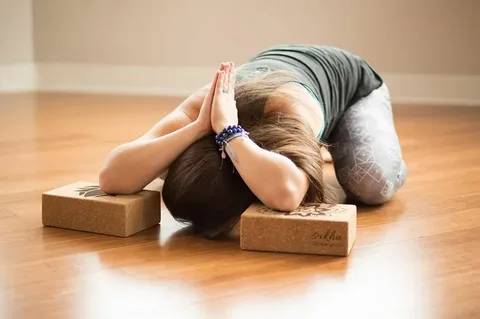
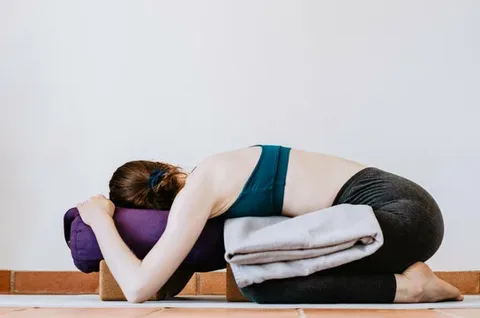
Supported Child’s Pose (Child’s Pose)
Benefits:
- Stress reduction
- Lower back relief
- Gentle hip opening
Use a supported child’s pose with a bolster placed beneath the torso for maximum comfort.
Reclined Bound Angle Pose (Supta Baddha Konasana)
Also known as the Reclined Butterfly Pose.
Benefits:
- Hip opening
- Deep relaxation
- Gentle chest expansion
Support the knees with yoga blocks or folded blankets.
Legs Up the Wall (Viparita Karani)
Benefits:
- Circulation improvement
- Nervous system calming
- Restorative yoga poses for blood pressure support
Supported Bridge Pose (Setu Bandha Sarvangasana)
Benefits:
- Gentle heart opener
- Relaxation and recovery
- Lower back support
Supported Reclined Twist
Benefits:
- Spinal release
- Body relaxation
- Stress relief
Restorative Savasana (Corpse Pose)
Benefits:
- Deep relaxation
- Sleep preparation
- Full-body recovery
Additional Supported Restorative Yoga Poses to Try
Reclined Pigeon Pose for Hip Relief
Benefits:
- Hip mobility
- Tension release
- Restorative yoga poses for hip relief
Supported Fish Pose for Chest Opening
Benefits:
- Improved breathing
- Relaxation support
- Posture improvement
Seated Forward Bend for Gentle Stretching
Benefits:
- Restorative stretching
- Hamstring relaxation
- Mindful awareness
Supported Half Frog Pose (Ardha Bhekasana)
Benefits:
- Gentle thigh opening
- Hip flexibility
- Lower-body relaxation
Seated Cat Cow for Restorative Movement
Benefits:
- Spinal mobility
- Gentle movement
- Breath-body connection
Restorative Yoga Poses for Specific Goals
Restorative Yoga Poses for Deep Relaxation
Recommended poses:
- Supported Child’s Pose
- Reclined Bound Angle Pose
- Restorative Savasana
Restorative Yoga Poses for Nervous System Support
Recommended poses:
- Legs Up the Wall
- Supported Reclined Twist
- Supported Fish Pose
Restorative Yoga Poses for Lower Back Relief
Recommended poses:
- Supported Child’s Pose
- Supported Bridge Pose
- Reclined Bound Angle Pose
Restorative Yoga Poses for Chronic Pain Management
Focus on:
- Supported yoga postures
- Gentle stretching
- Recovery yoga techniques
Restorative Yoga Poses for Cardiovascular Health
Helpful poses include:
- Viparita Karani
- Supported Bridge Pose
- Restorative Savasana
How to Build a Restorative Yoga Sequence
Key Principles of a Restorative Yoga Sequence
A balanced restorative yoga sequence should include the following:
- Forward fold
- Supported backbend
- Gentle twist
- Final relaxation pose
Beginner Restorative Yoga Sequence With Props
- Supported Child’s Pose—5 minutes
- Reclined Bound Angle Pose – 5 minutes
- Supported Bridge Pose – 5 minutes
- Restorative Savasana – 10 minutes
20-Minute Restorative Yoga Routine for Bedtime
This restorative yoga bedtime routine may include:
- Legs Up the Wall
- Supported Reclined Twist
- Restorative Savasana
This restorative yoga routine for bedtime can naturally promote better sleep.
How to Practice Restorative Yoga at Home
Setting Up a Space for Restorative Yoga at Home
To practice restorative yoga at home:
- Choose a quiet area
- Use supportive props
- Dim lighting, if possible
- Keep distractions minimal
Tips for a Successful Home Practice
- Focus on breath awareness
- Prioritize comfort
- Practice consistently
- Build a sustainable self-care routine
Common Mistakes to Avoid
- Using too few props
- Chasing deep stretches
- Ignoring alignment
- Rushing through poses
Should You Take a Restorative Yoga Class?
Benefits of a Guided Restorative Yoga Class
A restorative yoga class can help you:
- Learn proper prop placement
- Improve alignment
- Receive expert guidance
- Gain confidence
What to Expect in Restorative Yoga Classes
Most restorative yoga classes include:
- Supported yoga poses
- Relaxation techniques
- Breathwork
- Guided relaxation
They are suitable for yoga for beginners and experienced practitioners alike.
10 Important Words and Meanings
| Word | Meaning |
| Restorative | Promoting recovery and relaxation |
| Bolster | Firm cushion used for support |
| Savasana | Final relaxation pose in yoga |
| Parasympathetic | Body system responsible for rest and recovery |
| Mindfulness | Awareness of the present moment |
| Breathwork | Controlled breathing techniques |
| Relaxation Response | The body’s natural calming state |
| Alignment | Proper body positioning |
| Recovery | Process of physical and mental restoration |
| Therapeutic Yoga | Yoga used for healing and wellness |
Conclusion
Restorative yoga poses offer a simple yet powerful way to support relaxation, stress reduction, better sleep, and overall wellness. Through the use of supportive props, mindful breathing, and gentle postures, restorative yoga creates space for the body and mind to recover from daily demands.
Whether you are exploring beginner restorative yoga poses, building a restorative yoga sequence with props, or creating a bedtime routine, consistency is more important than intensity. Start with a few supported poses, listen to your body, and gradually develop a restorative yoga practice that supports your long-term health and well-being.
FAQs
What are restorative yoga poses?
Restorative yoga poses are supported postures held for extended periods to encourage deep relaxation, stress reduction, and nervous system recovery.
Can restorative yoga help improve sleep?
Yes. Restorative yoga for sleep helps calm the mind, reduce physical tension, and create conditions that support restful sleep.
How long should restorative yoga poses be held?
Most restorative yoga poses are held between 5 and 20 minutes, depending on comfort, experience level, and the purpose of the practice.
What props are needed for restorative yoga?
Common props include a yoga bolster, yoga blankets, yoga blocks, pillows, straps, and eye pillows to maximize support and comfort.
Is restorative yoga suitable for beginners?
Yes. Restorative yoga poses for beginners are accessible because they require minimal flexibility, strength, or prior yoga experience.