The journey of motherhood is a transformative whirlwind. Between the sleepless nights, the endless feedings, and the overwhelming love for your new arrival, it is easy to forget the person who made it all possible: you. Your body has just performed the ultimate marathon, bringing a new life into the world, and now it needs a gentle, supportive space to heal.
Postpartum yoga is more than just a “workout.” It is a dedicated practice designed to help you navigate the “fourth trimester.” It addresses the specific physical and emotional shifts that occur after delivery, helping you regain strength, find mental clarity, and process the massive transition of becoming a mother.
What is Postpartum Yoga?
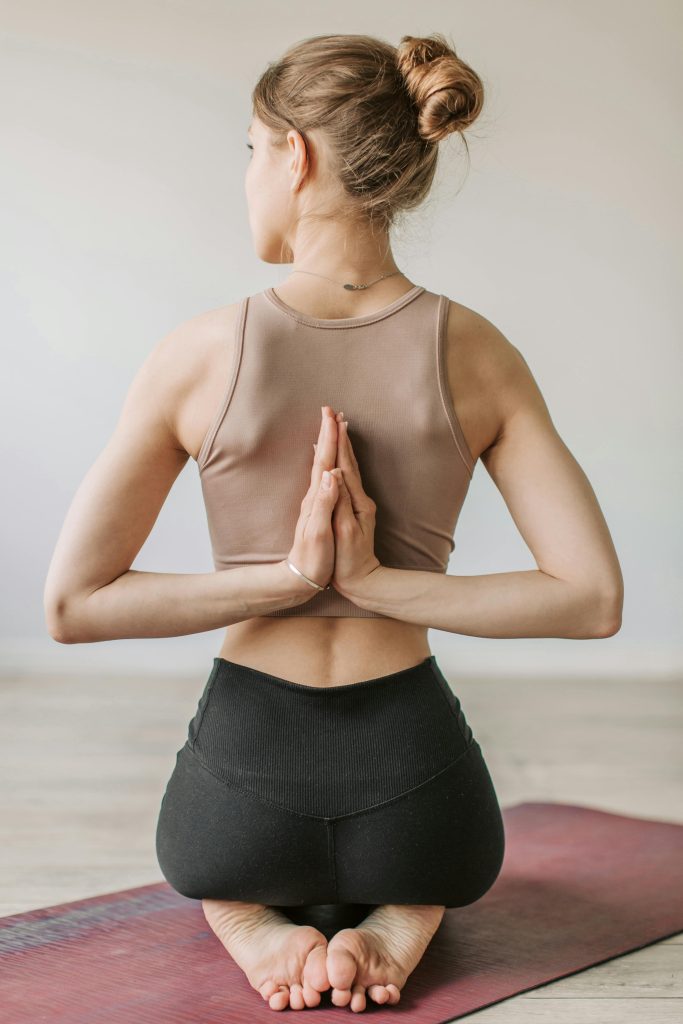
Postpartum yoga is a specialized form of yoga tailored to the needs of new mothers. Unlike a standard flow or a high-intensity session, this practice focuses on:
· Core Rehabilitation: Healing the abdominal wall and addressing diastasis recti.
· Pelvic Floor Recovery: Restoring tone and function to the muscles supporting the bladder and uterus.
· Spinal Alignment: Counteracting the “nursing slouch” and the strain of carrying a growing baby.
· Emotional Regulation: Using breathwork to manage the hormonal fluctuations of the postpartum period.
The Science of the Postpartum Body
To understand why yoga is so beneficial, we must first look at what happens inside the body after birth. During pregnancy, the hormone relaxin softens the ligaments and joints. For up to six months (or longer if you are nursing), this hormone remains in the body. This means your joints are more “hypermobile” and prone to injury if you jump back into high-impact sports too quickly.
Furthermore, the “linea alba,” the connective tissue between your six-pack muscles, stretches significantly. Postpartum yoga treats the body with the “rehab” mindset it deserves, focusing on stability before mobility.
When Can You Safely Start Postpartum Yoga?
One of the most frequent questions new moms ask is, “When can I get back on the mat?”
Waiting until your six-week postpartum check-up is the normal recommendation for most women. However, this isn’t a one-size-fits-all rule.
1. Vaginal Delivery
If you had an uncomplicated birth, you might feel ready for very gentle breathing and pelvic floor exercises within 2–3 weeks. However, standing poses and deep stretches should wait until the 6-week mark.
2. Cesarean Section
Since a C-section is major abdominal surgery, most doctors recommend waiting at least 8 to 10 weeks before attempting any core-focused movements. Your internal stitches need time to knit back together.
3. Listen to Your Body
Even with medical clearance, your body is the ultimate guide. If you experience increased bleeding (lochia), sharp pain, or extreme fatigue during or after a session, it is a sign to slow down.
The Physical Benefits: Restoring Your Foundation
1. Strengthening the Pelvic Floor
The pelvic floor muscles act like a hammock, supporting your internal organs. Pregnancy and birth can stretch or weaken these muscles, leading to issues like incontinence or prolapse. Postpartum yoga incorporates gentle Mula Bandha (root lock) techniques to help re-engage these muscles safely.
2. Healing Diastasis Recti (DR)
DR is the separation of the abdominal muscles. Traditional crunches, or “sit-ups,” can actually push the organs against the weakened tissue, making the gap worse. Yoga teaches you to engage the transverse abdominis (TVA), your body’s natural corset, to pull the muscles back together from the inside out.
3. Relief for “Mom Shoulders.”
Holding, rocking, and breastfeeding a baby often leads to rounded shoulders and upper back pain. This is often called “The Nursing Slouch.” Yoga poses like Chest Openers and Cow Face Arms help reverse this posture, opening the heart and relieving tension in the thoracic spine.
4. Hormonal Balance
Postpartum is a time of massive hormonal crashes (estrogen and progesterone drop significantly after birth). Yoga helps stimulate the endocrine system, promoting the release of oxytocin (the “love hormone”), which aids in bonding and breastfeeding.
The Mental Benefits: Finding Your Zen Amidst the Chaos
The transition into motherhood isn’t just physical; it’s a psychological shift. Postpartum depression (PPD) and postpartum anxiety (PPA) are real challenges that many mothers face.
· Stress Reduction: Deep diaphragmatic breathing (Ujjayi breath) triggers the parasympathetic nervous system, lowering cortisol levels.
· Body Positivity: In a culture that pressures women to “snap back,” yoga encourages you to appreciate your body for its strength and resilience rather than its size.
· Mindfulness: It provides a small window where you are not “Mom”; you are just yourself, present in the moment.
Detailed Week-by-Week Recovery Plan
Weeks 1-4: The Breath Phase
During this time, “yoga” should consist entirely of breathing and meditation.
· Focus: Diaphragmatic breathing.
· Goal: Reconnecting the brain to the pelvic floor.
· Pose: Savasana (Corpse Pose) with a pillow under the knees.
Weeks 6-10: The Stability Phase
Once cleared by a doctor, start adding gentle movement.
· Focus: Pelvic tilts and gentle cat-cow.
· Goal: Improving spinal mobility without straining the abs.
· Pose: Tadasana (Mountain Pose) to check alignment.
Weeks 12+: The Strength Phase
Now you can start building heat.
· Focus: Modified Sun Salutations.
· Goal: Full body integration.
· Pose: Warrior I and II (Virabhadrasana).
Essential Postpartum Yoga Poses (Step-by-Step)
1. Cat-Cow Pose (Marjaryasana-Bitilasana)
This is the gold standard for spinal mobility. It gently wakes up the core and helps relieve lower back pain.
· How to do it: Move slowly. On the inhale, drop the belly and look up (Cow). On the exhale, round the spine and tuck the chin (Cat). Focus on the gentle engagement of the navel toward the spine during the “Cat” phase.
2. Pelvic Tilts
Unlike full bridges, small pelvic tilts are excellent for early core stability.
· How to do it: Bend your knees while lying on your back. Tilt your pelvis upward to flatten your lower back against the floor. Hold for a few seconds and release.
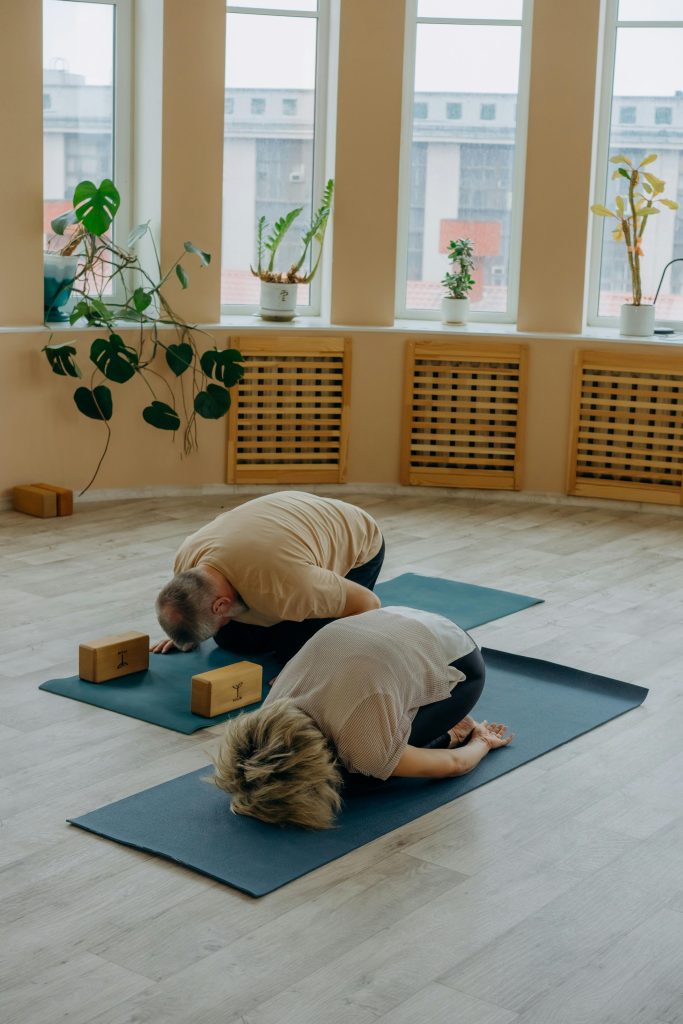
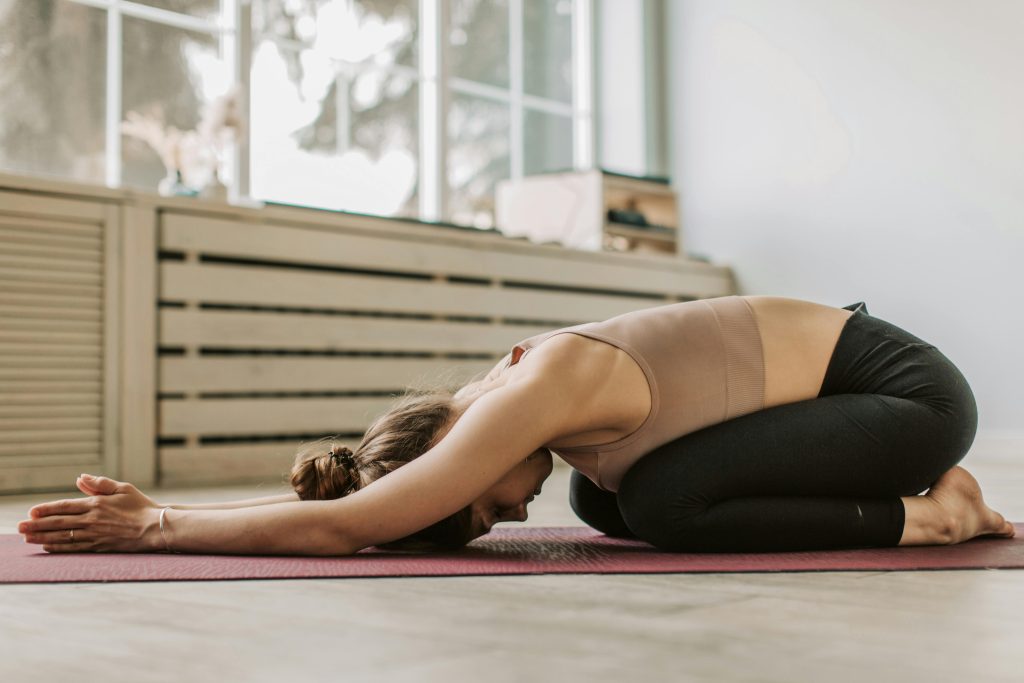
3. Child’s Pose (Balasana)
This is a restorative powerhouse. It allows the pelvic floor to relax and provides a gentle stretch for the hips and lower back.
· Tip: If you had a C-section, keep your knees wide to avoid pressure on your incision site.
4. Legs-Up-The-Wall (Viparita Karani)
After a day of being on your feet, this pose is a miracle worker. It helps with circulation, reduces swelling in the ankles, and calms the nervous system.
5. Modified Plank (Knees Down)
To rebuild core strength safely, a modified plank is essential.
· Note: Never do a full plank if you see “doming” or “coning” in your stomach, as this indicates the core is not yet ready.
Postpartum Nutrition: Supporting Your Practice
Yoga is only half the battle. To heal the tissues you are working on, your body needs specific nutrients:
· Protein and collagen: necessary for the healing of the pelvic floor and linea alba.
· Hydration: Especially important if you are breastfeeding, as yoga can increase circulation and fluid turnover.
· Magnesium: Helps with muscle recovery and can improve sleep quality during those short windows of rest.
Designing Your Home Practice: Tips for Success
As a new mom, getting to a yoga studio is often impossible. The key to a successful postpartum practice is flexibility, not just in your muscles but in your schedule.
· Keep it Short: A 10-minute session is better than zero minutes. Don’t wait for an hour-long window that might never come.
· Involve the Baby: “Mommy and Me” yoga is a great way to bond. You can place your baby on the mat beneath you during planks or hold them while doing gentle lunges.
· Create a Sanctuary: Even if it’s just a corner of the nursery, keep your mat unrolled. It serves as a visual reminder to take a moment for yourself.
· Use Props: Postpartum bodies often need extra support. Don’t be afraid to use blocks, bolsters, or even a folded-up baby blanket to make poses more comfortable.
Common Myths About Postpartum Fitness
Myth 1: You need to “snap back” immediately.
Reality: Your body took nine months to grow a human; give it at least nine months to recover. The “snap back” culture is harmful and ignores the physiological reality of internal healing.
Myth 2: If you aren’t sweating, it’s not working.
Reality: In the postpartum phase, “work” often means stabilization and stretching. Rebuilding the pelvic floor doesn’t require sweating, but it is some of the hardest work your body will do.
Myth 3: Yoga is only for “flexible” people.
Reality: Yoga is for anyone with a body. In postpartum, it’s about functionality, being able to lift your baby without back pain, not touching your toes or doing a handstand.
Safety Precautions and Red Flags
While yoga is therapeutic, it is important to practice with caution. Avoid the following in the early weeks:
· Deep Twists: These can put too much pressure on the midline of the abdomen.
· Intense Inversions: Your center of gravity has shifted, and your joints may still be loose.
· Heavy Core Crushing: Avoid traditional sit-ups until you have been checked for DR.
Watch for these signs:
· A sudden increase in vaginal bleeding.
· Pain in the pelvic or abdominal region.
· Dizziness or feeling faint.
· Leaking urine during a pose.
Conclusion
Postpartum yoga is a gift you give to yourself. It is a slow, intentional process of reclaiming your body and finding peace in your new role as a mother. By focusing on gentle strengthening, mindful breathing, and compassionate movement, you can navigate the challenges of early motherhood with greater ease and resilience.
Your body has done something miraculous. It deserves to be treated with kindness, patience, and the healing power of yoga. Remember, your mat will always be there for you, whether you have five minutes or fifty. Honor your journey, and celebrate the incredible feat your body has achieved.
FAQs
1. Can I do yoga if I had a C-section?
Yes, but you must wait longer for medical clearance (usually 8-10 weeks). Focus on breathing and upper body stretches initially, and avoid direct abdominal work until the incision is fully healed.
2. How often should I practice postpartum yoga?
Start with 2-3 times a week for 10-15 minutes. Consistency is more important than duration. As you get stronger, you can increase the time.
3. Does postpartum yoga help with weight loss?
While gentle yoga focuses more on toning and recovery, it can support weight loss by reducing stress-related cortisol and improving your body awareness, which leads to better lifestyle choices.
4. What is the hormone “relaxin,” and why does it matter?
Relaxin is a hormone that loosens your ligaments for birth. It stays in your system for several months after delivery (longer if breastfeeding), making it easy to overstretch and injure your joints if you are not careful.
5. Can I practice yoga while breastfeeding?
Absolutely. Just be mindful of chest-opening poses if your breasts are engorged or tender. A supportive sports bra is highly recommended.
6. Will yoga help my “mom pooch”?
Yoga helps strengthen the deep transverse abdominis muscles, which act as a natural corset. This can help flatten the midsection, but its primary goal is functional strength and internal healing.
7. Can I do hot yoga postpartum?
It is generally recommended to avoid hot yoga for at least 4 months postpartum to avoid dehydration, which can affect milk supply, and to protect loose ligaments from overstretching.
8. What equipment do I need?
A sticky yoga mat is essential. Blocks and a bolster (or firm pillows) are great for extra support. A yoga strap can also help if your shoulders are very tight from nursing.
9. Is yoga safe if I have diastasis recti?
Yes, but you must choose specific poses. Avoid anything that causes your belly to “pooch” out. Focus on transverse abdominal engagement and side-body stretches.
10. Can yoga help with postpartum depression?
Yoga is an excellent complementary therapy. The combination of movement and controlled breathing helps regulate the nervous system, which can alleviate symptoms of anxiety and low mood.