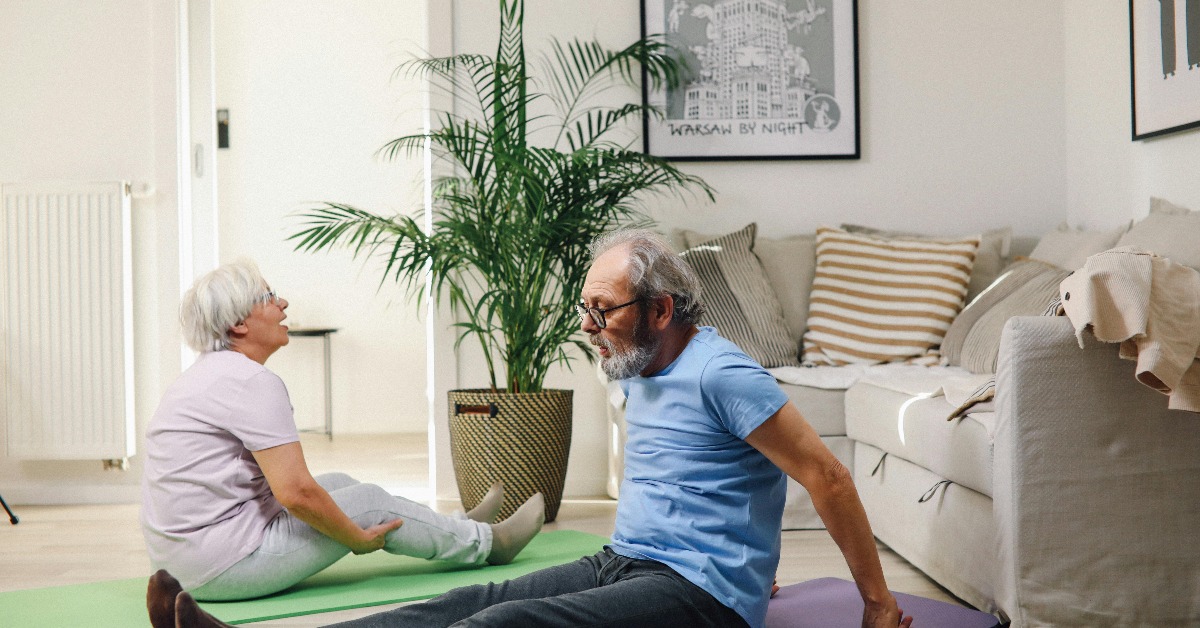
Have you ever wanted to try yoga with a friend but did not know which poses to start with? Two-person yoga poses can turn a simple yoga session into a fun way to stretch, move, and build trust together.
I was chatting with a friend when I suddenly came across the term “two-person yoga poses.”
At first, I had no clue what it meant. I kept wondering, “Am I missing something here?” I was a bit confused and did not want to get it wrong.
So, I decided to learn more about two-person yoga poses and understand what they mean and how they work.
I soon found that these poses are yoga movements done with a partner.
They can help two people stretch, balance, and support each other during practice.
Once I understood the idea, it became much clearer.
Two-person yoga poses are not just about doing yoga together.
They can also make practice more fun and help build teamwork, trust, and connection.
Benefits of Two-Person Yoga Poses

Practicing partner yoga poses offers more than just physical exercise. It helps strengthen your connection while improving overall fitness.
Benefits include:
- Improves flexibility
- Builds core and leg strength
- Enhances balance and coordination
- Develops trust between partners
- Improves communication
- Encourages teamwork
- Reduces stress and anxiety
- Improves posture
- Makes exercise more enjoyable
- Supports overall wellness
Even a 20-minute partner yoga routine can leave both participants feeling energized and relaxed.
What You Need Before Starting Partner Yoga
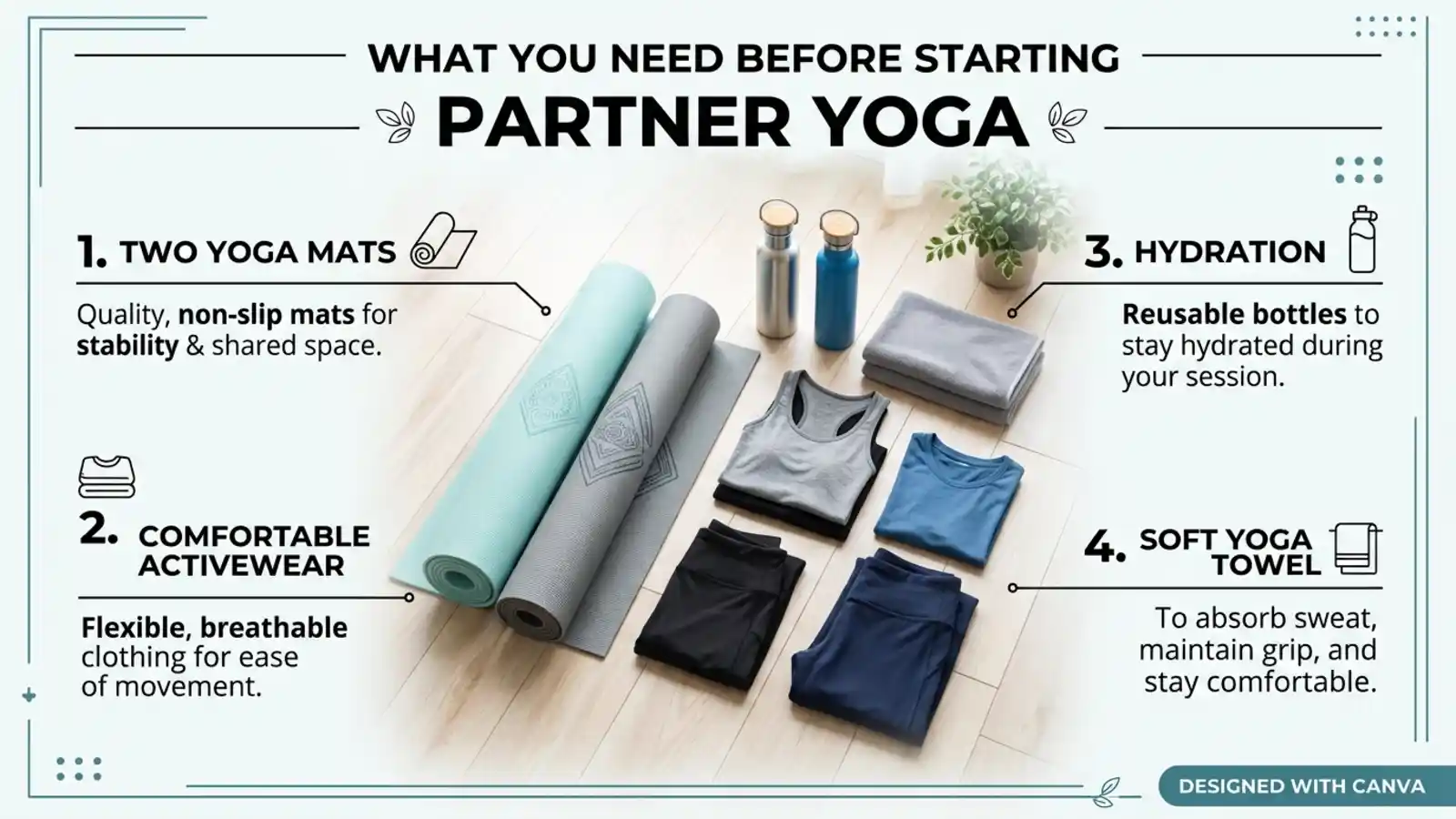
You don’t need expensive equipment to begin two-person yoga.
| Equipment | Purpose |
| Yoga mats | Provide grip and comfort |
| Comfortable clothing | Allows free movement |
| Water bottle | Keeps you hydrated |
| Open space | Prevents accidental collisions |
| Yoga blocks (optional) | Adds extra support |
Partner Yoga Safety Tips
Before trying any beginner partner yoga poses, keep these safety tips in mind:
- Warm up together for 5–10 minutes.
- Communicate throughout each pose.
- Move slowly and stay synchronized.
- Never force a stretch.
- Support each other’s balance.
- Stop immediately if either partner feels pain.
- Practice on a non-slip surface.
- Focus on proper breathing.
15 Easy Two-Person Yoga Poses
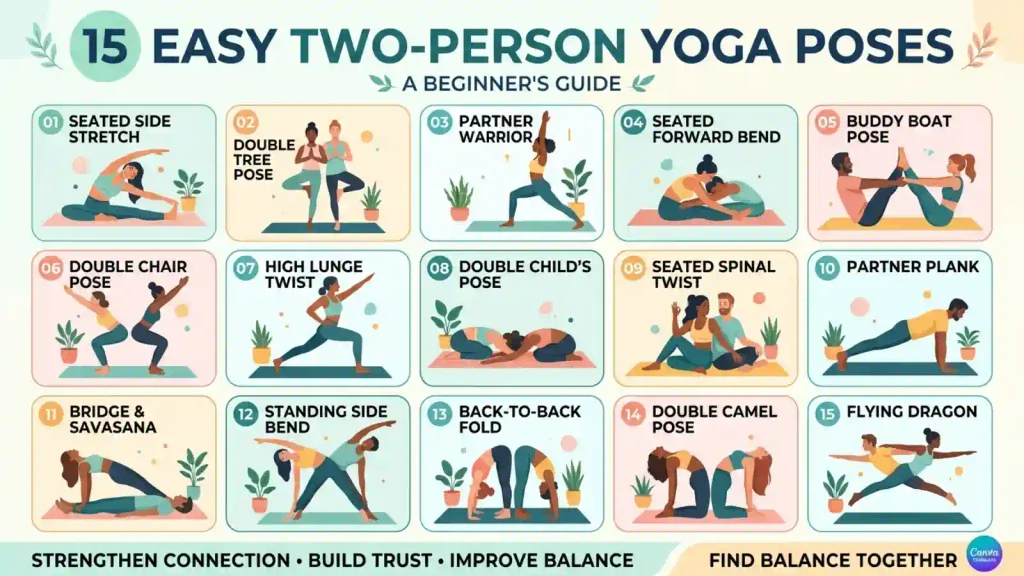
1. Seated Back-to-Back Breathing Pose
This simple pose is perfect for beginners because it helps partners synchronize their breathing while improving posture.
Benefits
- Encourages mindfulness
- Improves posture
- Builds trust
- Promotes relaxation
How to Do It
- Sit cross-legged back-to-back.
- Gently press your backs together.
- Rest your hands on your knees.
- Close your eyes.
- Breathe slowly and match each other’s breathing.
- Continue for 2–3 minutes.
2. Partner Forward Fold
One of the easiest partner stretching exercises, this pose gently stretches the hamstrings and lower back.
Benefits
- Improves flexibility
- Relieves lower-back tension
- Enhances communication
- Encourages gentle stretching
Steps
- Sit facing each other with legs extended.
- Hold each other’s wrists or hands.
- One partner leans back gently while the other folds forward.
- Hold for 20–30 seconds.
- Switch roles.
3. Double Child’s Pose
This relaxing posture helps both partners release tension while gently stretching the back and shoulders.
Benefits
- Reduces stress
- Stretches the spine
- Promotes relaxation
- Improves flexibility
Steps
- One partner begins in Child’s Pose.
- The second partner kneels behind and gently stretches forward.
- Keep movements slow and controlled.
- Hold for 30–60 seconds.
- Switch positions.
4. Partner Cat-Cow Pose
This variation of cat-cow improves spinal mobility while helping partners coordinate their movements.
Benefits
- Improves spinal flexibility
- Relieves stiffness
- Warms up the body
- Encourages synchronized movement
Steps
- Sit facing each other.
- Hold each other’s forearms.
- Inhale while arching your backs.
- Exhale while rounding your spine.
- Repeat for 8-10 breaths.
5. Partner Seated Twist
This gentle twist improves spinal mobility while encouraging teamwork.
Benefits
- Improves spinal flexibility
- Enhances posture
- Relieves tension
- Supports healthy digestion
Steps
- Sit back-to-back.
- Cross your legs comfortably.
- Twist toward the right while placing one hand on your partner’s knee.
- Hold for 20 seconds.
- Repeat on the opposite side.
6. Partner Tree Pose
Tree Pose becomes more stable and fun with a partner.
Benefits
- Improves balance
- Strengthens the legs
- Builds confidence
- Enhances coordination
Steps
- Stand side by side.
- Place your inside arms around each other’s shoulders.
- Lift your outside foot onto your inner calf or thigh.
- Press your palms together with your free hands.
- Hold for 20–30 seconds.
7. Double Downward Dog
This pose stretches the entire body while improving strength and flexibility.
Benefits
- Strengthens shoulders and arms
- Improves flexibility
- Builds trust
- Enhances body awareness
Steps
- One partner begins in Downward-Facing Dog.
- The second partner carefully places their feet near the first partner’s hips while forming another Downward Dog.
- Move slowly and communicate throughout.
- Hold for 15-20 seconds.
8. Partner Boat Pose
Partner Boat Pose strengthens the core while improving balance.
Benefits
- Builds abdominal strength
- Improves balance
- Strengthens hip flexors
- Encourages teamwork
Steps
- Sit facing each other.
- Hold hands firmly.
- Press the soles of your feet together.
- Lift your legs into a “V” shape.
- Balance together for 20-30 seconds.
Why Partner Yoga Is Great for Beginners
Starting with easy two-person yoga poses helps build confidence without requiring advanced flexibility.
A consistent partner yoga routine can help you:
- Improve flexibility
- Develop stronger communication
- Increase body awareness
- Build trust and cooperation
- Strengthen major muscle groups
- Reduce daily stress
- Make exercise more enjoyable
Practicing together also provides motivation and accountability, making it easier to stay consistent.
9. Partner Standing Side Stretch
The Partner Standing Side Stretch is a simple pose that lengthens the sides of the body while improving flexibility and posture.
Benefits
- Stretches the shoulders and sides
- Improves spinal mobility
- Enhances flexibility
- Encourages synchronized movement
How to Do It
- Stand side by side.
- Hold your inside hands together.
- Raise your joined hands overhead.
- Lean gently away from each other.
- Hold for 20–30 seconds.
- Repeat on the opposite side.
10. Partner Chair Pose
Partner Chair Pose strengthens the lower body while helping both partners improve balance and coordination.
Benefits
- Strengthens the legs and glutes
- Builds core stability
- Improves balance
- Enhances teamwork
How to Do It
- Stand back-to-back.
- Interlock your elbows or hold hands.
- Slowly bend your knees together.
- Lower into a chair position.
- Hold for 20–30 seconds before standing.
11. Partner Standing Forward Fold
This gentle stretch helps improve hamstring flexibility while supporting each partner’s balance.
Benefits
- Stretches the hamstrings
- Relieves lower-back tension
- Improves flexibility
- Builds trust
How to Do It
- Stand facing each other.
- Hold each other’s forearms.
- Step back slightly.
- Hinge forward from your hips while maintaining a straight spine.
- Hold for 20–30 seconds.
12. Temple Pose
Temple Pose is one of the most popular partner yoga poses because it creates a deep stretch for the shoulders, back, and hamstrings.
Benefits
- Opens the shoulders
- Lengthens the spine
- Improves posture
- Builds coordination
How to Do It
- Approximately an arm’s length apart, face your companion.
- Place your palms against each other’s.
- Slowly step backward.
- Hinge at your hips until your backs are nearly parallel to the floor.
- Hold for 30 seconds while breathing deeply.
13. Partner Warrior I
Partner Warrior improves lower-body strength while helping both participants maintain stability.
Benefits
- Strengthens the legs
- Opens the hips
- Improves balance
- Builds confidence
How to Do It
- Stand facing each other.
- Step one foot back into Warrior I.
- Reach forward and hold your partner’s hands.
- Keep your front knee bent.
- Hold for 20–30 seconds before switching sides.
14. Supported Backbend
This gentle assisted stretch opens the chest and shoulders while improving flexibility.
Benefits
- Opens the chest
- Improves posture
- Relieves upper-body tension
- Enhances flexibility
How to Do It
- Stand back-to-back.
- Link your arms.
- One partner gently leans forward while the other opens the chest.
- Move slowly and communicate throughout.
- Hold for 20 seconds, then switch roles.
15. Partner Savasana
Partner Savasana is the perfect way to end your yoga session, allowing both partners to relax and recover.
Benefits
- Reduces stress
- Promotes relaxation
- Encourages mindfulness
- Supports recovery
- Strengthens emotional connection
How to Do It
- Lie on your backs beside each other.
- Rest your arms comfortably.
- Close your eyes.
- Focus on slow, natural breathing.
- Relax for 5-10 minutes.
Complete Beginner Partner Yoga Routine
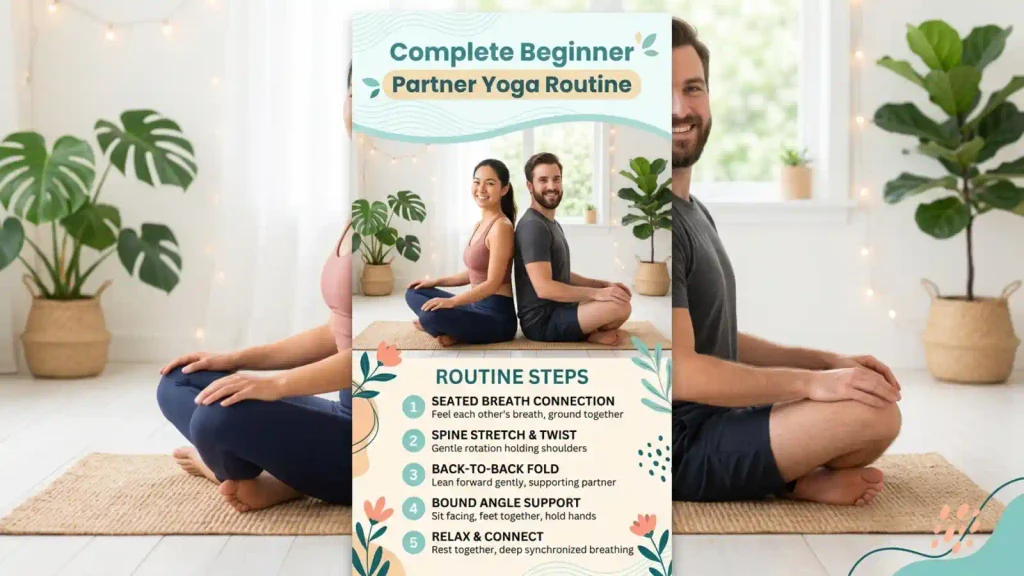
This partner yoga routine combines all 15 poses into a balanced session that improves flexibility, strength, balance, and connection.
| Pose | Duration |
| Seated Back-to-Back Breathing | 2 minutes |
| Partner Forward Fold | 1 minute |
| Double Child’s Pose | 1 minute |
| Partner Cat-Cow | 1 minute |
| Partner Seated Twist | 1 minute |
| Partner Tree Pose | 30 seconds each side |
| Double Downward Dog | 20 seconds |
| Partner Boat Pose | 30 seconds |
| Standing Side Stretch | 30 seconds each side |
| Partner Chair Pose | 30 seconds |
| Standing Forward Fold | 30 seconds |
| Temple Pose | 30 seconds |
| Partner Warrior I | 30 seconds each side |
| Supported Backbend | 20 seconds |
| Partner Savasana | 5–10 minutes |
Total Time: Approximately 20–25 minutes
This routine is ideal for couples, friends, or family members who want to enjoy a fun and effective yoga session together.
Common Mistakes to Avoid
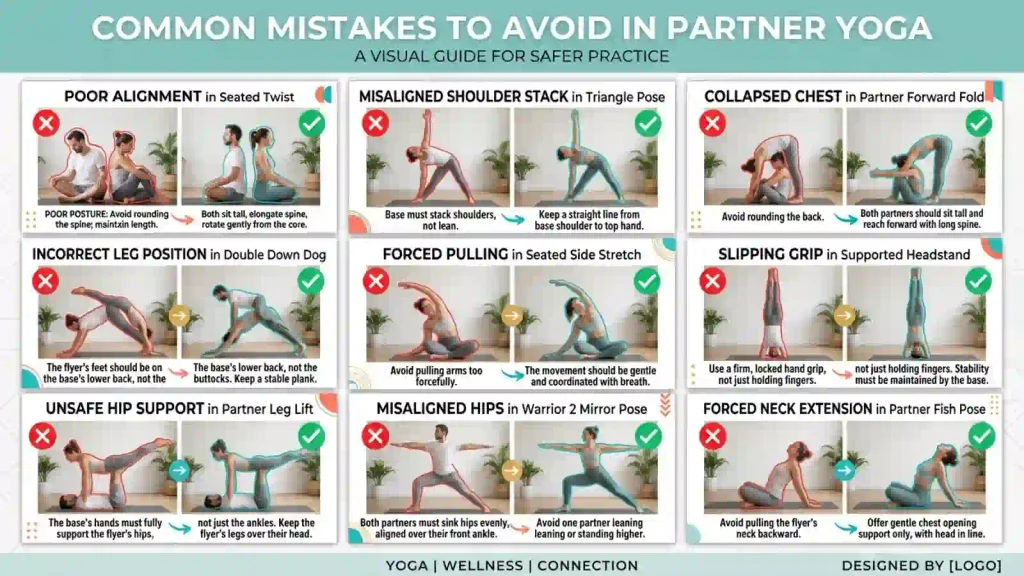
When practicing two-person yoga poses, avoid these common mistakes:
- Skipping the warm-up
- Holding your breath during poses
- Moving too quickly
- Ignoring your partner’s comfort level
- Forcing deeper stretches
- Poor communication
- Locking your joints
- Practicing on a slippery surface
- Choosing advanced poses too early
- Forgetting to relax after practice
Safety Tips for Partner Yoga
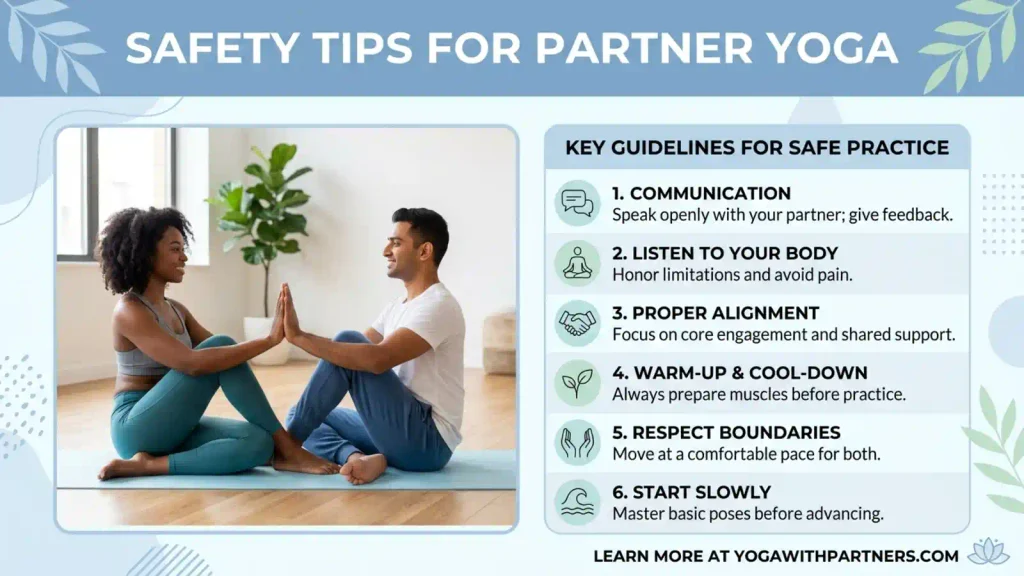
Follow these tips to keep every session safe and enjoyable:
- Warm up together before starting.
- Communicate throughout each pose.
- Support each other’s balance.
- Practice on a non-slip yoga mat.
- Move slowly and mindfully.
- Never force a stretch or movement.
- Stay hydrated during longer sessions.
- Stop immediately if either partner feels pain.
- If you have injuries, balance issues, or medical conditions, consult a qualified healthcare professional before starting a new exercise program.
Tips for a Successful Partner Yoga Practice
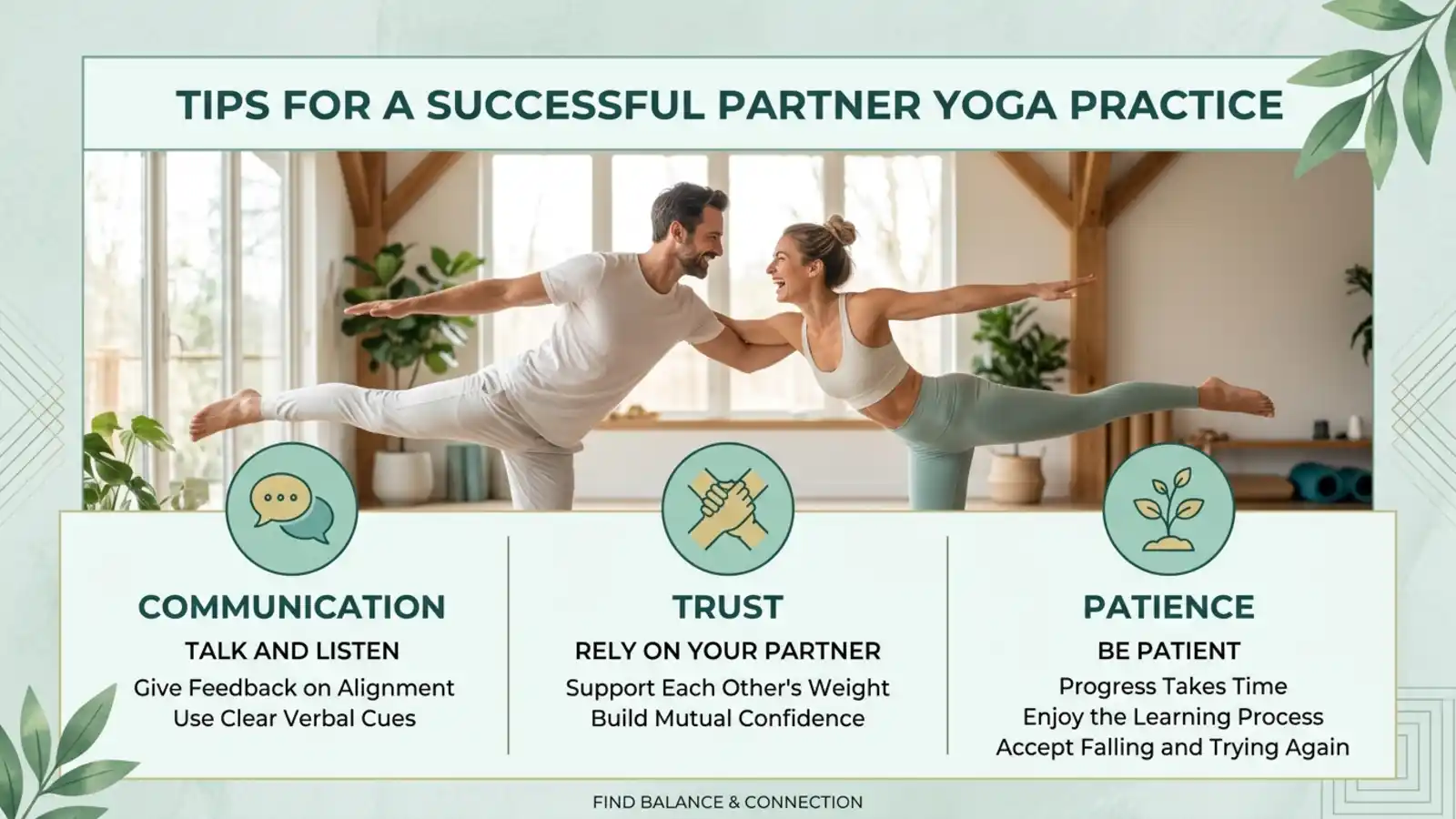
To get the most from your home partner yoga sessions:
- Practice regularly, two to four times each week.
- Choose poses that match both partners’ abilities.
- Focus on quality rather than difficulty.
- Maintain steady breathing throughout each movement.
- Encourage and support each other.
- Progress gradually to more advanced poses.
- End each session with relaxation and gratitude.
Building consistency helps improve flexibility, strength, and confidence while deepening trust and communication.
Conclusion
Practicing two-person yoga poses is a fun and rewarding way to improve physical fitness while strengthening your connection with a partner. These 15 beginner-friendly partner yoga poses help increase flexibility, improve balance, build strength, and encourage teamwork through shared movement and mindful breathing. Whether you’re practicing with a friend, family member, or significant other, adding partner yoga to your weekly routine can make exercise more engaging and enjoyable. Start with the simpler poses, communicate openly, and progress at a comfortable pace. With regular practice, you’ll develop greater flexibility, confidence, coordination, and a stronger sense of connection both on and off the mat.
FAQs
1. What are the best two yoga poses for beginners?
Some of the best beginner poses include Seated Back-to-Back Breathing, Partner Forward Fold, Double Child’s Pose, Partner Tree Pose, Partner Boat Pose, Temple Pose, and Partner Savasana.
2. Is partner yoga safe for beginners?
Yes. Partner yoga is safe when both participants communicate clearly, move slowly, avoid forcing stretches, and choose poses appropriate for their experience level.
3. What advantages can partner yoga offer?
Partner yoga can improve flexibility, strength, balance, posture, communication, trust, coordination, and stress management while making exercise more enjoyable.
4. How often should we practice partner yoga?
For most beginners, practicing 2–4 times per week for 20–30 minutes is a practical way to build consistency and gradually improve flexibility, balance, and strength.
5. Do we need to be flexible before trying partner yoga?
No. Flexibility develops over time with regular practice. Beginners can start with simple partner poses and gradually work toward more challenging variations as their mobility and confidence improve.