One of the most prevalent health issues impacting people of all ages is back discomfort. Whether it results from prolonged sitting, poor posture, muscle strain, or an underlying condition, persistent discomfort can interfere with daily life. Fortunately, practicing the best yoga poses for back pain can help reduce stiffness, improve flexibility, strengthen supporting muscles, and promote better posture.
Yoga combines gentle stretching, controlled breathing, and mindful movement to support spinal health naturally. Regular practice of yoga poses for back pain may relieve tension in the lower and upper back while improving mobility and core strength. Many healthcare professionals also recommend yoga for back pain as part of a comprehensive treatment plan for non-specific back pain, provided it is practiced safely.
In this guide, you’ll learn 15 safe yoga stretches for back pain, how to perform each pose correctly, their benefits, and important safety tips to help you practice with confidence.
What Causes Back Pain?
Back pain can develop for many reasons, ranging from everyday habits to medical conditions. Identifying the cause helps you choose the most appropriate exercises and avoid movements that may worsen discomfort.
Common Causes of Back Pain
- Poor posture while sitting or standing
- Weak core muscles
- Tight hamstrings and hip flexors
- Muscle strains or sprains
- Sedentary lifestyle
- Heavy lifting with improper technique
- Herniated or bulging discs
- Sciatica
- Arthritis
- Stress and muscle tension
Many of these issues can improve with gentle movement and strengthening exercises. That’s why yoga for lower back pain and upper back pain yoga routines have become increasingly popular.
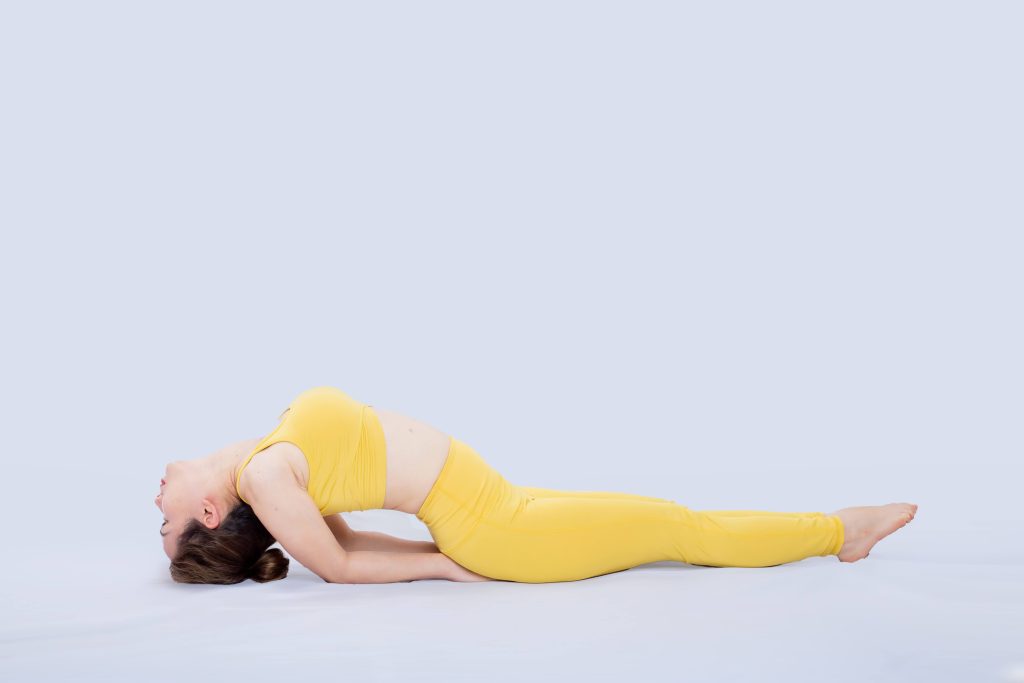
Benefits of Yoga for Back Pain
Practicing back pain yoga poses consistently can provide both immediate relief and long-term improvements.
Reduces Muscle Tension
Gentle stretches release tight muscles in the back, hips, and shoulders.
Improves Spinal Mobility
Controlled movements help keep the spine flexible and reduce stiffness.
Strengthens Supporting Muscles
Many yoga poses for lower back pain strengthen the core, glutes, and back muscles that support proper posture.
Encourages Better Posture
Yoga improves body awareness, making it easier to maintain healthy alignment throughout the day.
Supports Stress Relief
Deep breathing and mindfulness reduce stress, which often contributes to muscle tension and chronic pain.
Additional Benefits
- Better flexibility
- Improved balance
- Increased circulation
- Reduced back stiffness
- Enhanced mobility
- Greater body awareness
Safety Tips Before Practicing Yoga for Back Pain
Before starting gentle yoga for back pain, follow these important precautions.
| Safety Tip | Why It Matters |
| Warm up for 5–10 minutes | Prepares muscles and joints |
| Move slowly | Prevents sudden strain |
| Never force a stretch | Reduces injury risk |
| Keep breathing steadily | Helps muscles relax |
| Use a yoga mat | Improves stability |
| Stop if pain increases | Prevents worsening symptoms |
| Consult a healthcare professional for severe pain | Ensures safe practice |
Important Note
If you have severe pain, numbness, recent spinal surgery, fractures, or significant yoga for sciatica or pain concerns, consult a qualified healthcare provider before beginning any exercise program.
Best Yoga Poses for Back Pain
Below are some of the safest and most effective yoga stretches for back pain, suitable for beginners and experienced practitioners alike.
1. Cat-Cow Pose
Cat-Cow Pose is one of the best warm-up exercises for improving spinal flexibility and reducing stiffness.
How to Do It
- Start on your hands and knees.
- Put your knees beneath your hips and your wrists beneath your shoulders.
- Breathe in while raising your head and arching your back (Cow).
- Exhale as you round your spine and tuck your chin (Cat).
- Repeat for 8-10 slow breaths.
Benefits
- Improves spinal mobility
- Reduces stiffness
- Warms up the back muscles
- Promotes healthy posture
2. Child’s Pose
Child’s Pose is a gentle resting posture that stretches the lower back and hips while calming the nervous system.
Steps
- Kneel on the mat.
- Sit back on your heels.
- Extend your arms forward.
- Lower your forehead toward the floor.
- Hold for 30-60 seconds.
Benefits
- Relieves lower back tension
- Stretches hips and thighs
- Encourages relaxation
- Reduces stress
3. Cobra Pose
Cobra Pose gently extends the spine and helps counteract the effects of prolonged sitting.
How to Practice
- Lie face down.
- Place your hands beneath your shoulders.
- Press gently into your palms.
- Lift your chest while keeping your elbows slightly bent.
- Hold for 15-30 seconds.
Benefits
- Strengthens the back
- Opens the chest
- Improves posture
- Increases spinal flexibility
4. Sphinx Pose
Sphinx Pose is a beginner-friendly backbend that provides a milder stretch than Cobra Pose.
Steps
- Lie on your stomach.
- Position your elbows under your shoulders.
- Lift your chest comfortably.
- Relax your shoulders.
- Hold for 30–60 seconds.
Benefits
- Supports spinal health
- Improves posture
- Gently stretches the lower back
- Strengthens the spine
5. Bridge Pose
Bridge Pose strengthens the glutes, core, and lower back while improving spinal stability.
Steps
- Lie on your back.
- Bend your knees.
- Place your feet flat on the floor.
- Lift your hips upward.
- Hold for 20–30 seconds.
Benefits
- Strengthens core muscles
- Supports the lower back
- Opens the chest
- Improves pelvic stability
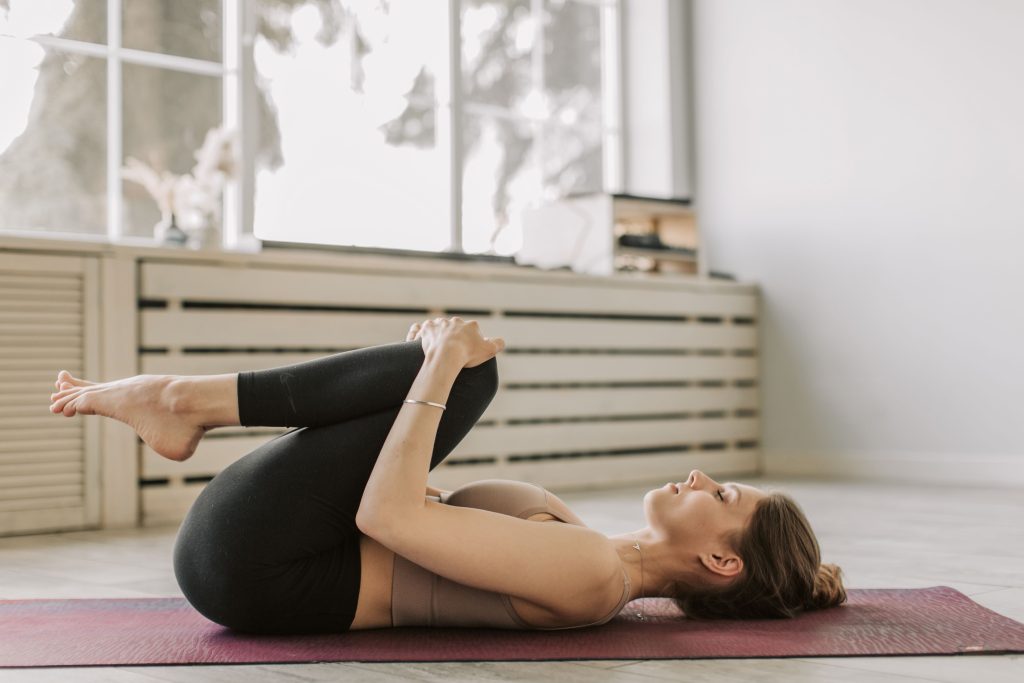
6. Knees-to-Chest Pose
This gentle stretch helps release tension in the lumbar spine.
How to Perform
- Lie on your back.
- Bring both knees toward your chest.
- Wrap your arms around your legs.
- Hold for 30 seconds while breathing deeply.
Benefits
- Relaxes the lower back
- Improves hip mobility
- Reduces muscle tightness
- Encourages relaxation
7. Supine Twist
The supine twist improves spinal mobility and gently stretches the muscles surrounding the spine.
Steps
- Lie flat on your back.
- Bring your knees toward your chest.
- Lower both knees to one side.
- Keep both shoulders on the floor.
- Hold for 30 seconds before switching sides.
Benefits
- Improves spinal rotation
- Relieves back stiffness
- Stretches the hips
- Promotes relaxation
8. Pelvic Tilt
The Pelvic Tilt is one of the most effective beginner yoga exercises for back pain because it strengthens the core while protecting the spine.
How to Practice
- Lie on your back with your knees bent.
- Tighten your abdominal muscles.
- Flatten your lower back against the mat.
- Hold for 5 seconds.
- Relax and repeat 10–15 times.
Benefits
- Strengthens the core
- Stabilizes the pelvis
- Supports the lower back
- Improves posture
9. Downward-Facing Dog
Downward-Facing Dog is one of the most recognized yoga poses. When practiced with proper form, it stretches the entire back body while strengthening the shoulders and core.
How to Do It
- Begin on your hands and knees.
- Tuck your toes under.
- Lift your hips toward the ceiling.
- Straighten your legs as much as is comfortable.
- Keep your spine long and your heels reaching toward the floor.
- Hold for 20–30 seconds.
Benefits
- Stretches the spine
- Lengthens the hamstrings and calves
- Strengthens the shoulders and arms
- Improves posture
- Helps reduce back stiffness
Tip: Slightly bend your knees if your hamstrings feel tight to avoid straining your lower back.
10. Happy Baby Pose
Happy Baby Pose gently stretches the hips, groin, and lower back, making it one of the best yoga poses for lower back pain.
How to Do It
- Lie on your back.
- Bend your knees toward your chest.
- Hold the outside of your feet or ankles.
- Keep your knees wider than your torso.
- Gently pull your knees toward the floor.
- Hold for 30–60 seconds.
Benefits
- Relaxes the lower back
- Opens the hips
- Releases muscle tension
- Promotes relaxation
11. Standing Forward Fold
This gentle stretch helps decompress the spine and lengthen the muscles along the back of the body.
Steps
- Stand with your feet hip-width apart.
- Hinge forward from your hips.
- Let your arms hang naturally.
- Keep a slight bend in your knees.
- Hold for 20-30 seconds.
Benefits
- Stretches the back muscles
- Improves flexibility
- Relieves tension
- Enhances circulation
12. Thread the Needle Pose
This pose is excellent for relieving upper back pain and yoga concerns caused by tight shoulders and poor posture.
Steps
- Start on all fours.
- Slide one arm underneath your body.
- Rest your shoulder and temple on the mat.
- Extend the opposite arm forward.
- Hold before repeating on the other side.
Benefits
- Stretches the upper back
- Improves shoulder mobility
- Reduces neck tension
- Encourages spinal rotation
13. Reclined Figure Four Pose
Tight hips often contribute to lower back discomfort. This pose helps release those muscles.
Steps
- Lie on your back.
- Cross one ankle over the opposite knee.
- Pull the supporting leg toward your chest.
- Hold for 30 seconds.
- Switch sides.
Benefits
- Opens the hips
- Relieves glute tightness
- Supports lower back comfort
- Improves flexibility
14. Seated Forward Bend
This classic stretch lengthens the spine and hamstrings while promoting relaxation.
Steps
- Sit with your legs extended.
- Inhale to lengthen your spine.
- Fold forward from your hips.
- Reach toward your feet comfortably.
- Hold for 20-30 seconds.
Benefits
- Improves flexibility
- Relieves lower back tension
- Stretches hamstrings
- Calms the nervous system
15. Legs-Up-the-Wall Pose
This restorative pose is perfect for ending your yoga-to-relieve-back-pain routine.
Steps
- Sit beside a wall.
- Swing your legs up the wall.
- Lie flat on your back.
- Relax your arms at your sides.
- Stay for 5-10 minutes.
Benefits
- Relaxes the lower back
- Reduces muscle fatigue
- Improves circulation
- Relieves stress
Best Yoga Poses for Different Types of Back Pain
| Back Pain Type | Recommended Yoga Poses |
| Lower Back Pain | Child’s Pose, Knees-to-Chest Pose, Pelvic Tilt, Happy Baby Pose, Bridge Pose |
| Upper Back Pain | Thread the Needle Pose, Cat-Cow Pose, Cobra Pose, Sphinx Pose |
| Back Stiffness | Downward-Facing Dog, Supine Twist, Standing Forward Fold |
| Chronic Back Pain | Gentle Cat-Cow, Child’s Pose, Legs-Up-the-Wall Pose, Sphinx Pose |
Common Mistakes to Avoid
Even the best yoga poses for back pain can become ineffective or even harmful if performed incorrectly.
Avoid these common mistakes:
- Skipping your warm-up
- Holding your breath during poses
- Forcing your body into deep stretches
- Ignoring pain signals
- Rounding your back excessively
- Moving too quickly between poses
- Practicing on a slippery surface
- Attempting advanced poses too soon
- Neglecting proper alignment
- Practicing inconsistently
Listening to your body is one of the most important principles of safe yoga practice.
Tips for Practicing Yoga Safely with Back Pain
To get the most from your lower back pain yoga routine, keep these tips in mind:
- Practice 3-5 times per week.
- Begin with gentle stretches.
- Focus on slow, controlled breathing.
- Engage your core during standing poses.
- Use yoga blocks or cushions if needed.
- Increase your flexibility gradually.
- Stay hydrated before and after practice.
- Finish every session with a relaxation pose.
- Combine yoga with regular walking and good posture habits.
Consistency matters more than intensity. Small improvements over time often lead to lasting relief.
When Should You See a Doctor?
While yoga can help many people, it is not a substitute for medical treatment.
Seek medical advice if you experience:
- Severe or worsening back pain
- Pain lasting longer than a few weeks
- Numbness or tingling in the legs
- Loss of bladder or bowel control
- Pain after a fall or accident
- Fever, unexplained weight loss, or other concerning symptoms alongside back pain
A healthcare professional can identify the underlying cause and recommend the safest treatment plan.

Conclusion
The best yoga poses for back pain combine gentle stretching, strengthening, and mindful breathing to improve spinal health and reduce discomfort. Whether you’re dealing with lower back pain yoga, upper back pain yoga, or general stiffness, practicing these 15 poses regularly can help improve flexibility, posture, and core stability.
Start with beginner-friendly poses like Cat-Cow Pose, Child’s Pose, and Sphinx Pose, then gradually add poses such as Bridge Pose, Downward-Facing Dog, and Happy Baby Pose as your strength and mobility improve. Remember to move slowly, maintain proper alignment, and stop if you experience sharp or worsening pain.
With patience and consistency, yoga can become a valuable part of your long-term back care routine, helping you move more comfortably and confidently every day.
FAQs
1. What is the best yoga pose for lower back pain?
Child’s Pose, Knees-to-Chest Pose, Pelvic Tilt, and Happy Baby Pose are among the most effective yoga poses for relieving lower back pain gently.
2. Can yoga really help relieve chronic back pain?
Yes. Regular, gentle yoga may improve flexibility, strengthen the muscles that support the spine, reduce stiffness, and help manage chronic back pain. If your pain is severe or persistent, consult a healthcare professional before starting.
3. How often should I practice yoga for back pain?
Most people benefit from practicing 20-30 minutes, 3-5 times per week, while allowing the body to recover between sessions.
4. Is yoga safe for people with sciatica?
Gentle yoga can help some people with sciatica by improving flexibility and reducing muscle tension. However, certain poses may aggravate symptoms, so it’s important to consult a healthcare professional and avoid movements that increase pain.
5. Which yoga poses should I avoid if I have back pain?
Avoid deep backbends, intense twists, and advanced inversions until your back is stronger. If any pose causes sharp pain, stop immediately and seek guidance from a qualified yoga instructor or healthcare provider.